
There are 3 classes of Devas or gods in Buddhist cosmology. The first kind are the formless devas in the formless heavens (arupa loka), who have no desire nor body, only pure mind. They enjoy the sublime bliss of the formless Jhanas & have extremely long lives (up to 84,000 Maha Kalpas or great eons), which gives these devas the illusion of eternal life. The second kind are the devas of form, who have bodies but no desire. They experience the pure bliss of the 1st to the 4th Jhana. Brahma devas belong to the the lower heavens of form (rupa loka) & there's no male & female distinction in this realm. Their bodies are sexless & are made of pure radiance. They also have very long lives (up to 16,000 Maha Kalpas). The last kind are the devas in the heavens of desire (kama loka), like the Tavatimsa or Tusita heavens, which have male & female distinction - meaning that these devas still have sex, but in a much more refined way compared to humans & animals. Different devas in the different heavens of desire have sex in different ways. For example those in the heaven of the 4 kings & the Tavatimsa simply let their spiritual energy mingle. Those in the Yama heaven only need to go close to each other. Those in Tusita heaven simply hold hands & those in the Nimmanarati heaven only have to look at each other! These devas are constantly enjoying great sensual pleasures which are the fruits of their good karma. Though their lives are relatively short (millions to billions of years) as compared to the devas of form & formlessness, but it's still a very long time to us humans.
When devas are going to die, they first show the 5 minor signs of decay, followed by the 5 major signs, after which they will immediately fall to the lower realms. This applies to all devas in the heavens of form & desire alike, no matter whether they are sexless, male or female.
The 5 minor signs are:
1. They no longer hear divine music.
2. Their radiance becomes diminished.
3. Water start to wet their bodies.
4. They start to miss the heavenly enjoyments.
5. Their divine sight could no longer perceive the entire world.
The 5 major signs are:
1. Their celestial robe becomes unclean.
2. Their crown of flowers wilt.
3. Sweat start to flow from their armpits.
4. Their bodies start to smell.
5. They start to become very agitated.
For the formless devas, they do not expereince these signs cos they have no bodies, but once their time is up, their minds will lose the bliss of the formless Jhanas & thus dissappear from that realm to be reborn into the lower realms.
So u can see that it is difficult for devas to cultivate the Dhamma bcos the bliss or enjoyments in the heavens are so great that often devas don't think of the Dhamma until it is too late (when the 5 major signs of decay appear). In the same way, humans who have a lot of money & pleasure will never think of practicing the Dhamma until they are old & dying. By that time, it will probably be too late. Thus the best condition to practice the Dhamma is not to be a deva or human with an easy life, but just a normal person that have experienced some degree of suffering. Only those who know suffering will have a heart to seek the end of suffering that is Nibbana.


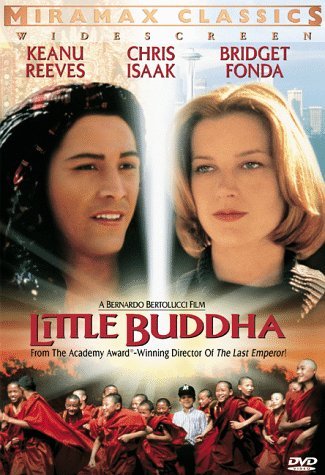
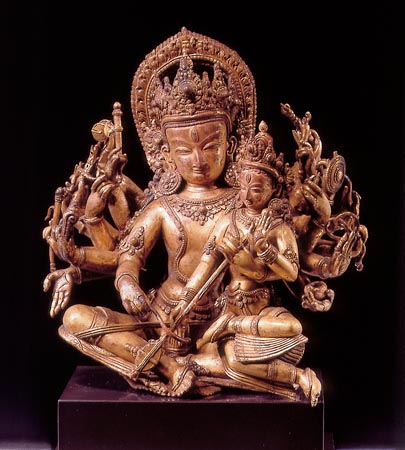
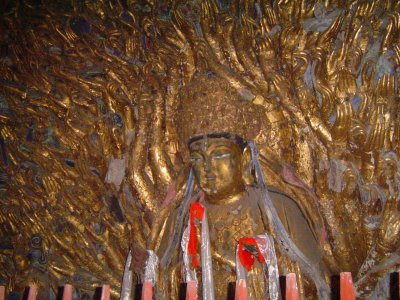 For the enlightened being, the mind is the Buddha-nature, & for the Buddha nature, one is all & all is one. The Buddha-nature can be one candle, & can also be many candles, in fact even infinite number of candles that can all be used to lit other candles. In the absolute mind there is no concept of time, space or numbers; because from the viewpoint of the absolute, all time, space & numbers are also not apart from it. That is how the Bodhisattvas can be reborn in many manifestations at the same time. Although they appear to be reborn, in reality nothing is born or dies. It is like an illusionist who creates many illusionary beings. Can these unreal beings be said to born & die? Likewise, manifestations of the enlightened ones appear & disappear all the time for the sake of teaching sentient beings, but the Buddha-nature remains unmoved.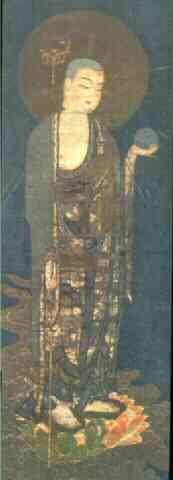

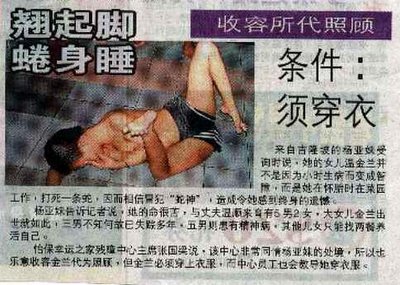 This Snake Girl was named Wen Jinlan by her mother, Yang Yamei (60 yrs old); not that a name had any meaning at all to her. Whenever her family tried to dress her, she would angrily tear up her clothes and throw them far far away, much to her mother's frustration. As Mdm Yang's husband is old (72 yrs) and in ill health, she had no choice but to get help from the Petaling Guanyin Temple. The temple managed to get the Ipoh Disabled Children's Home to take Snake Girl in. Last week Mdm Yang had finally taken Snake Girl to the home. Although she is 29, she looked no older than a teenage child, and is less than 4 feet tall. Still refusing to wear clothes, the mother had somehow put Snake Girl in a pair of shorts. After being hand-fed by her mother, Snake Girl lazily coils up on the floor to sleep, legs in the air & tounge still slithering.
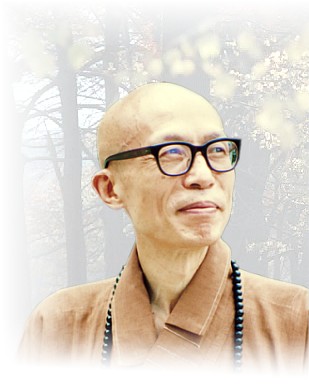 Even up to today, renowned Buddhist scholars like Ven Shengyan from Taiwan also share this kind of thinking. The ironic thing is that he himself is a Chan Master who professes lineage from the Caodong (Soto) branch of Chan Buddhism. He once wrote in his book "The Orthodox Beliefs of Buddhism" that "The enlightenment of Chan is not equal to attaining Buddhahood. At most it is only equal to attaining the pure Dharma eye; which is the Sotapanna (stream-entry) stage of sainthood in Theravada or the first Bhumi (plane) of enlightenment in Mahayana."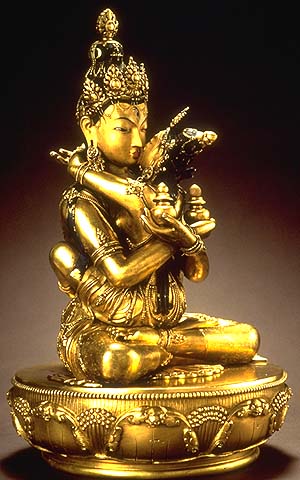



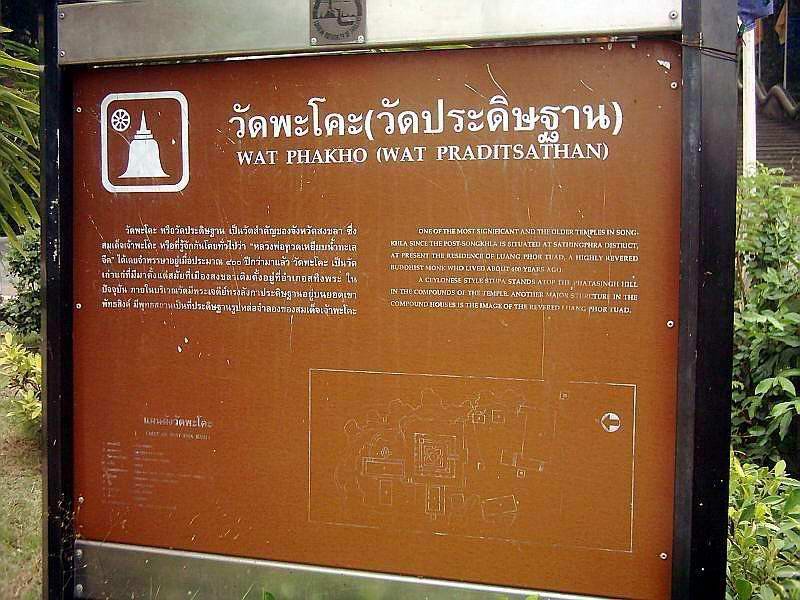
 As we all know, Wat Phakho is the temple where LP Tuad resided during his youth, before he travelled to Ayuthaya to further his Dhamma studies. This temple is located on the Phiphetasing Hill and therefore we need to climb up the hill to reach it. This long flight of steps are flanked by Nagas, which is a distinct feature of hilltop temples in Thailand.
 Near the entrance we are greeted by 2 statues of LP Tuad, in Samatid as well as Dhutanga postures. This temple was built many centuries ago (in 1514 AD) and houses many ancient objects & artifacts, many belonging to LP Tuad.
 The side hall is where the revered golden image of LP Tuad is kept, covered from head to toe with gold leaf. You can almost feel LP Tuad's presence here in the Sala.
 The main Chedi (Stupa) of the temple below is a well known symbol of Wat Phakho.
 It was renovated in recent years and given a fresh coat of white paint. It is said to house the Buddha's Footprint; notice the mystical aura or glow surrounding the Chedi. This a definitely a place of great power.
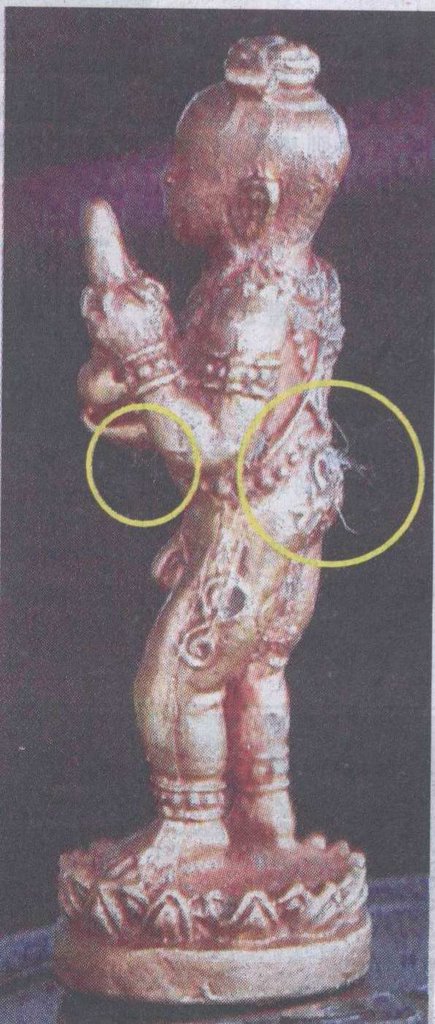
 A small Chedi below the main one caught my eye. In front of the Chedi is a statue of a young boy. Could this be a stupa of Kumantong or maybe just one of the young novices of this temple?
  A tall white Chedi behind the main one. This probably belongs to one of the past abbots.
  The golden reclining Buddha (Phra Non) statue in the pavillion (Sala). He smiles radiantly towards all sentient being who come and worship at the temple.
 The main prayer hall (Bot) of the temple houses 3 southern styled Buddha statues as well as another seated image of LP Tuad. As we can see, there's an intricate web of white string below the roof, used for consecration of sacred amulets & images.
 One of my favorite Buddhas, Phra Sangajai or Maitreya (to the Chinese) located at the back of the temple, overlooking the South China Sea.
 The old court house - Wat Phakho used to be the religious & political centre on this side of Songkhla, and therefore all legal matters were discussed here around 300 years ago. But it had long been converted into another Sala for people to worship.
  A life-sized wax image of LP Tuad, and yes, his magical crystal ball! According to the legend, this crystal ball is given to him by a python (probably a Naga) when he was a baby, and had followed LP Tuad ever since.
  I could not go near it as the whole thing was protected by a glass chamber. However, as it was raining heavily at that time, I sat down and meditated outside the chamber in order to feel the energy radiating from the ball. It was a blissful experience! When the rain became lighter, I made my way down to hill and proceeded on my way back to Had Yai. This was without a doubt, one of my most memorable temple tours I took to Thailand. Hopefully I can also visit Wat Changhai (in Pattani), where LP Tuad attained enlightenment when it is safe from the terrorist threat. May the Dharmakaya of LP Tuad protect everyone, sadhu.

 What is the karmic cause of such a disaster? None other than the 3 Poisons within one's mind. In the past, during the reign of Emperor Qianlong of the Qing Dynasty in China, there was a Runzhou district in the Jiangsu province. The inhabitants of that district were mostly fishermen who made a living catching fish, frogs & shells. They were used to daily killing and there was also a terrible tradition of disposing of female offspring by leaving them out in the open to die, or by drowning them. Everyday they caught fish & frogs and the elders would teach the children how to slaughter these creatures. This became their habit and these people thought it was great to know the art of slaughtering.
 On the other hand her once divorced husband, who by nature likes to flirt around, is still sticking to his old habits and not giving her the attention that she deserves. Provoked into jealousy and anger, Hong decided to hire a young delinquent to beat up the object of her hatred - Xian-zai. As the previous attack did not cause serious injury to Xian-zai, the crime was not reported to the police. It only made the family more protective of Xian-zai. Unfortunately, that made Hong even more peeved. She felt she needed to make an even stronger statement to draw the attention of her nonchalant husband. Hong took out her savings and hired 2 thugs to teach Xian-zai a lesson he would never forget. Wielding cleavers that could easily inflict fatal injuries to any adult, let alone a young boy, the 2 thugs struck Xian-zai while he was returning home from school with his grandma.
  Now lying in hospital and slowly making a recovery, he could only listen in bewilderment as people tell him how his stepmom and all suspected accomplices got arrested by the police one-by-one. Xian-zai could not have imagined himself becoming the object of sympathy of the entire Hong Kong in a single day. Celebrity well-wishers have been visiting him in hospital and consoling the boy with all sorts of gifts. Child-cousellers have been appointed to relieve him of his traumatic experience. As for Hong, she would be charged with attempted murder, which warrants a life-sentence. Under a jury system swayed by public opinion, the HK courts would no doubt convict the young lady and all those men she hired to harm Xian-zai. These are the unwholesome fruits of her jealousy and anger. For her this mental prison transforms into a physical prison - proof of the Dhamma that one's enviroment is shaped by the state of one's mind. It is also important to note that this family tragedy is caused by Cen Weicheng's thoughts of lust (much like Ah How in Singapore), which often drove him to sexual misconduct.