Thursday, November 01, 2007

Strange photos taken in Paris

In the Doctrine of the Mean, Confucius said:

"The abundant virtue of spiritual beings is truly amazing! Looking for them, they cannot be seen; listening for them, they cannot be heard. Yet there is nothing that they do not embody. They cause the people of the world to fast for purification and wear grand clothes in order to perform sacrificial ceremonies. They are overflowing, seeming to be above, seeming to be on the left and right. The Book of Odes says: 'Trying to perceive the presence of the spirits, yet we cannot grasp them. How could we not respect them?' The manifestation of the subtle and the inconcealability of sincerity is also like this!"

For the whole month of October, I was in Paris for a training program organized by my department. The classes were only half-day, so in the afternoons I took the opportunity to do some sightseeing. Paris is a truly beautiful city; there were historic monuments, cathedrals, museums, palaces, squares, gardens & statues everywhere. Being in Europe for the first time, I was quite overwhelmed by the rich history & culture of the city. But one place was particularly interesting for me as I managed to take some unusual pictures there. This place is none other than the Invalides Army Museum (seen above), which besides being a museum for a large number of military relics from the medieval times until WW2, also houses the Tomb of Napoleon, his brothers & other great generals.

Emperor Napoleon died in 1821 after being exiled to the island of St Helena by the British, following his defeat at Waterloo in Belgium. His remains were moved back to France in 1840 and entombed in a sarcophagus at Les Invalides.

This is the big red sarcophagus containing Napoleon's remains. Notice that there is a translucent white orb at the base of the sarcophagus. If you zoom in on this photo, you can also see another small white orb at the side of the sarcophagus. I didn't notice it when I took the picture, but only when I reviewed it later. Could the spirit of Napoleon still be hanging around his tomb?

Then there is also Jerome Napoleon, his youngest brother, the Marshal of France who died in 1860 at Villegenis and buried in Les Invalides later.

When I took a picture of his sarcophagus, immediately I saw this bright bluish orb obscuring the face of Jerome's statue. On closer examination, it is actually 2 orbs joining together at the level of his face. I thought this was very strange. If you zoom in on the picture, you can also see a faint but big white orb at the base of the statue. On the right of the base, as well as on the sarcophagus itself, you can also see 3 other faint & smaller white orbs. Jerome's spirit? Devadas or Petas? Whatever they are it convinced me there there were definitely many invisible beings inside this Invalides museum.

And this is Joseph Napoleon, his older brother and King of Spain for a short period. He died in 1844 at Florence, Italy and was moved back to Paris to lay beside his brother inside Les Invalides.

Again when I took a picture of Joseph's sarcophagus, I noticed the 2 big white orbs on the top left corner of the picture. These 2 orbs are not as bright as those in Jerome's picture, but still clearly visible. If you zoom in on the picture, you can also see 2 other fainter & smaller white orbs on the upper right side of the picture, one beside the statue & the other on the pillar. I was getting to be quite amazed at the number of invisible beings showing up there. But there were no other orb sightings seen in the subsequent photos I took at the museum.

Some time later I travelled to Brussels in Belgium. Above is the Arc De Triomphe in Brussels. Behind the monument is another military museum similar to the one in Paris.

When I asked my colleague to take a picture of me standing beside this big artillery gun, I was shocked to see a big & bright white orb above my head! On closer examination you can see that it is actually 2 bright orbs joining into 1. If you look really close, you can almost make out a face in those orbs. Man, just who are these "guys"?

The final odd picture will have to be this beautiful shot of the Eiffel Tower in Paris at night. You can immediately see one small but bright white orb on the right side of the tower, as well as at the bottom. There is also another smaller but visible white orb on the right side of the photo. If you zoom in on the photo, you can actually see many other faint white orbs all around the tower. Interestingly enough, this shows that the Eiffel Tower is not just teaming with loads of human tourists, but spirit ones as well. I realized that the Dhamma is such that no matter whether you are Human, Deva or Peta, we all share some common activities, likes & dislikes. Perhaps the tower is so attractive that even the Devadas & Petas come to visit? Hmm.. I leave readers to ponder about that themselves.

Saturday, September 29, 2007

The Future of Burma

The Book of Great Learning says:
"He who loses the (hearts of the) people loses the state."
It has been 10 days since the beginning of the nationwide anti-Junta protests started by the monks in Burma, and the situation is getting worse every day. Already large numbers of monks & civilians have been beaten, arrested, even slain by the merciless soldiers sent in to crack down on peaceful protesters.

The Dao De Jing says:
"Why threaten the people with death,
when they are no longer afraid of dying?"
My heart goes out to the suffering Burmese monks and people. Despite its rich natural resources, economically Burma is no better than North Korea after decades of isolation. After the recent 5-fold increase in fuel prices, the impoverished people are literally faced with starvation, which leaves them no choice other than to take to the streets along with the monks. However instead of being heard they are shot at, struck down with sticks and thrown behind bars.
The Junta government in Burma has oppressed its people for far too long. They have no qualms about plunging their own nation into an abyss of poverty and hopelessness, only to cling on to illegitimate power. Nothing has changed since the 1988 massacre of 3,000 over protesters, other than the mastermind of the violence - General Tan Shwe, another ruthless dictator. Like North Korean "Dear Leader" Kim Jong Il, he himself lives like a King while the rest of the country are going through hell trying to survive from day to day.

What future does the Burmese nation have, under such a corrupt and violent regime? How can ordinary people and monks with little possessions hope to topple their military rulers, who have been entrenched in power for the past few decades?

The answer lies in one word - Karma. The sins of the Junta has ripened since 1988, and the reaping of their evil fruits is imminent. On the surface it looks impossible for the people to overthrow them, but the Junta is not as united as it appears to be. The moment they spilled the blood of the Sangha as well as the people, the Junta effectively sealed their own fate in the same way that the Taliban sealed theirs when they destroyed the Bamiyan Buddha statues. Forces of dissent among the military are growing stronger in different parts of Burma. These forces feel sympathy for the Buddhist religion as well as for their own countrymen. Mark my words, soon there will be revolts within the Burmese Army itself.

The Dao De Jing also says:
"When the people no longer fear oppression,
then the great calamity (for the ruler) has arrived."
And that would be the beginning of the end for the Junta and General Tan Shwe. Even as monks, ordinary folks and foreign journalists lay dying on the ground, surely the dawn of a new era awaits Burma after an eternal midnight. Let us pray for the safety and peace of all those suffering people. May they be protected by the power of the Dhamma, sadhu.

Sunday, September 16, 2007

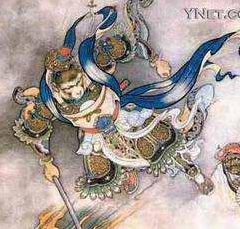
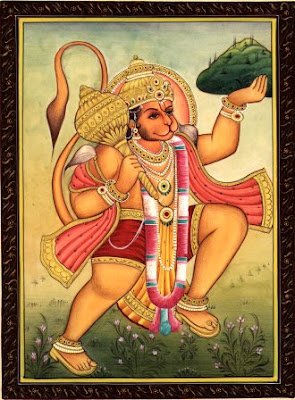
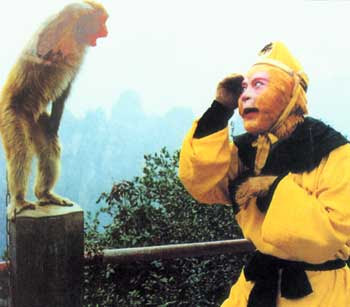
Monkey God Tree of Jurong West

During the middle of the week (14.9.07) there were a few newspaper reports on the discovery of monkey images appearing in a 16 yr old tree by the roadside along Jurong West St 42, near Blk 431. Some Chinese people believed that it was Qi Tian Da Sheng (Sun Wukong), the Monkey God manifesting in that tree and started spreading the word around. A certain uncle who first discovered the "miraculous tree" wrote a notice in red ink telling of the legend surrounding it. It says that: "Three yrs ago, a divine monkey had come searching for his father, the Monkey God, at this tree. But it was only until a recent accident which caused the bark of the tree to fall off that the Monkey God became freed. I (the uncle) discovered the image on the tree on Sep 9th at 9.52am when I drove past the tree, and was thus filled with a feeling of awe beyond words. May the Monkey God bless everyone." This notice now laid beside the foot of the tree, along with all the offerings of fruits, peanuts, flowers, candles & joss sticks as we could see in the top most picture. In a typical Singaporean fashion, many people also started to pray for 4-D numbers.
A closeup of the Monkey God image on the tree. Residents in the area also add to the legend saying that although a few accidents had happened at that spot, none had been fatal. One said he had seen a lorry crash into the tree in March, causing the front of the lorry to be completely smashed. This resident was driving past and stopped my car to see if the driver needed help, but he saw him climb out uninjured at all. Others said that in the last 13 years, the tree had been hit by vehicles 3 times; but in all those accidents, the drivers also escaped unscathed. So naturally people attributed these lucky escapes to the Monkey God's blessing & protection.

On the 14th, there were only dozens of people praying at the tree, mostly Chinese. Later Indian residents also started to come and pray. For them, they also believe that it is the Hindu Monkey God - Hanuman appearing in the tree.
But whether it is Sun Wukong or Hanuman, what matters most was that everyone believed they could get good luck by praying at this miraculous tree. Some smart Indian lady was also selling photos of the Monkey God image at $3 a piece.. she was already cashing in on the luck even as other people prayed for numbers.

In a space of 2 days (15.9.07), the curious crowds who came to see the Monkey God Tree swelled to hundreds, even thousands, causing traffic jams & making a lot of noise for residents in the area. Some of these people even claim that they can see Guanyin & Ganesha images in the nearby trees. SPI guys went down, and they tested strong EMF fields coming from the tree. A local Thai white-robe Ajarn also came to perform prayers, revealing that there was indeed a "monkey spirit" dwelling in the tree. What was most amusing was the middle-aged auntie who claimed to be a medium for Hu Ye, the Tiger deity. She crawled around the tree like a tiger, only to pray for 4-D numbers like the others. What a smart way to beat the crowds..

This whole episode taking place in modern Singapore shows a good example of how folk religion is formed. Strange images appear in trees, rocks or other nature objects, & people immediately think that it is some gods, deities or spirits manifesting themselves. They start to pray, they start to spread the word, & soon a shrine is formed. As more & more people come it develops into a temple, perhaps even forming a religious sect later!
The Dhammapada says:
"Wonderful indeed, it is to subdue the mind,
so difficult to subdue, ever swift,
and seizing whatever it desires.
A tamed mind brings happiness."
What people fail to see is that the real monkey is not in the tree, but in their minds, or we can call it the monkey mind. In the story of the "Journey to the West", although Sun Wukong had great powers, it could only be put to good use after being tamed & taught in the right way by Buddha & Guanyin. Likewise, our mind is very powerful, yet very wild, undisciplined, easily distracted & quickly agitated. It constantly grasps at sensual objects, lusting for what it finds attractive, hating what it finds unattractive. This untrained mind of love & hate is the cause of endless becoming & dissolving, the source of all our Dukkha (suffering).
Thus in order to seek lasting happiness we have to train it in the path of the Ariyas, the Noble Ones. We restrain the monkey mind with the chain of mental Sila (the precepts), training it to focus on doing useful work with mental Samadhi (meditation), & make it realize the immense benefits of its own labour with mental Panna (arising of insight). Finally this monkey mind becomes completely tamed, well-trained, awakened. It is now a Buddha. Just like at the end of the "Journey to the West", Sun Wukong is bestowed the title of "Victorious Buddha" by the Buddha for his merits in protecting Master Tang Sanzang all the way to India & taking the scriptures back to Tang Dynasty China. This is the true path of the Monkey God, who is none other than our own Monkey Mind. Do you see it?

Monday, September 03, 2007

Korean Hostage Crisis: Prison of Ignorance

An interesting article I read in the ST today says the Taliban declared that the South Korean government paid them US$20 million as ransom to secure the release of all the hostages; something which they denied of course. The terrorist group had now vowed to use the funds to buy arms and mount more suicide attacks. "With it (the money) we will purchase arms, get our communication network renewed and buy vehicles for carrying out more suicide attacks." So said one of the Taliban commanders. Although the remaining 19 Koreans got to live, who knows how many more innocent people will die in their place now that the Taliban got so much more money to spend.

Many countries criticized the SK government for conceding to the Taliban's demands; but what are they to do otherwise? To let their own citizens die just like that? No, the SK government are not to blame for bailing their own people out. If there is anyone to blame, it should be the leaders of the Christian church group who sent these 23 Korean members to Afghanistan to do missionary work in the first place. The group had obstinately ignored government warnings against travelling to Afghanistan, after more than 1,000 Korean Christians were already deported since last year due to "security concerns". For these foolish church leaders, whose faith have blinded their common sense, the blood of the 2 Korean members killed by the Taliban is on their hands. Their actions have caused their own people to lose US$20 million to terrorists, in addition to the suffering on their own members. And when the Taliban kill hundreds, maybe thousands of other innocent people with their new weapons, these church leaders will realize the severe consequences of their ignorance. Instead of spreading God's word, they end up indirectly causing the loss of many lives in the near future.

Truly, Ignorance is a dark prison that defiles whatever deeds we do, be they good or evil. Faith without wisdom is blind faith, & instead of doing "God's work" as some of those people imagine themselves to be, they end up making a big mess out of everything, in God's name. Therefore in Buddhism much emphasis is placed on Wisdom Perfection or Prajna Paramita. Without wisdom, none of the practices we do will ever become complete. Whether it is Sila (Discipline) or Samadhi (Concentration), or the Paramitas of Dana (Giving), Sila, Ksanti (Patience), Virya (Zeal) & Dhayna (Meditation), all these practices will not be able to bear fruit without insight into the nature of reality that comes from the application of Prajna. It is only through Prajna that the other practices can be called "Paramita".

Although the Buddha had compassion for all sentient beings, yet he did not go out & try to help everyone indiscriminately. The Buddha had the Jnana (knowledge) to know when & where is the best to teach certain people, their mental aptitudes & whether they are ready to be taught or not. He is able to teach in such a way that people always receive the greatest possible benefit from hearing the Dharma at the right moment. If the necessary conditions are not ripe, the Buddha would not teach such a person, even though he is face-to-face with him or her. To do otherwise would not help the person, or worse, it might even be harmful when aversion or anger is aroused. It is because of such wisdom that the Buddha is known as "Satta Deva Manussa-nang" - the Teacher of gods & men. To always balance Compassion with Wisdom is what will truly benefit oneself & other beings. This is where we must all learn from the Buddha.

Friday, August 31, 2007

Travels in Pattani - Wat Rai

On 25th August 2007 I made another trip to Pattani in Southern Thailand. Besides the usual temples I also went to Wat Rai this time. Wat Rai is a new temple which needed funds to build its Ubosot & other buildings. Above is the current abbot of Wat Rai, Ajarn Daeng. When I went there he was not around, but at Wat Phra Mahathat in NST to participate in a Jatukam consecration ceremony.
Ajarn Daeng's room & Wiharn.
A tall potrait of the late LP Poom, who was Ajarn Daeng's master. Notice the picture seemed to exudes a mystical aura.
The temporary Bot of Wat Rai. The main Buddha image venerated is called Phra Si Thep Sakya. Below is the statue of LP Poom. The green board on the floor shows the Arattana katha taught by LP Poom.
The eating room.
A venerated Banyan tree outside the temporary Bot.
The new Ubosot is still in construction.
The temple counter selling Ajarn Daeng's amulets as well as a whole lot of other stuff.
Ajarn Daeng's LP Tuad amulets as well as bullet shell takruts. They are excellent for protection. The Thai Army guys in the area like his takruts very much. Readers interested in getting some of these stuff can email me at crane@pacific.net.sg

Sunday, August 12, 2007

Temples in Pattalung - Wat Phaksak

Wat Phaksak is a more remote temple in Pattalung, relatively deserted and not many buildings around. There were lots of mosquitoes and it was next to a forest. It used to be one of the more famous temples, but not many people know about it now. Above is the main Sala of the Wat.

A photo portrait of LP Dit, the founding abbot of Wat Phaksak who passed away in 2507 BE (1964) at the age of 86.

In another rundown Sala, there is an altar to 4 Buddha statues.

This small wiharn enshrines the statues of LP Dit and his successor Ajarn Daeng.

There is a green pond in the the temple with a standing Buddha statue partially submerged right in the middle of it. Their idea of the Buddha taking a bath?

This is one of LP Dit's cross-hand Phra Pidta. Very affordable antique amulet!

Wat Phaksak's new batch of Jatukam, Roon Kodapi Mahasettee. The front side is completely the same as the popular 2549 Kodsettee batch, but the back side is LP Dit's Pidta. But unlike the Kodsettee it is much more affordable. One can consider it the poor man's Kodsettee! The amulets here are cheap because of its location & also it is not that well-known. With that I left Pattalung and headed back home.

Saturday, August 11, 2007

Temples in Pattalung - Wat Donsala

Next we come to another famous temple in Pattalung, Wat Donsala. LP Yiad, the master of LP Kong (Wat Bansuan) came from this temple. He is also very well versed in the Puttakom arts. LP Yiad passed away in 2491 BE (1948) at the age of 66. He was succeeded by Ajarn Nam, who passed away in 2520 BE (1970) at the age of 85. Above is the main Sala of this temple.

The altar inside the Sala. Besides the 8 great disciples flanking the Buddha statue, they also have portraits of the King & Queen of Thailand.

A tall portrait to Ajarn Si Ngern (I think), who took over from Ajarn Nam as abbot after the latter died. He also created many well-known amulets.

Outside the Sala is another altar with 6 Buddha statues in front & back positions.

The Bot is closed as usual.

This wiharn venerates all the famous monks of this temple. When there's consecration cermonies going on, all of them are invited back with the Saisin (holy thread). That's all for the pics here at Donsala. There was also nothing much to get there, except for more affordable Jatukam amulets which I passed. Unfortunately one can't find those antique amulets of LP Yiad, Ajarn Nam or even Ajarn Si Ngern. What a waste.

Temples in Pattalung - Wat Kao Or

Wat Kao Or - arguably the most famous temple in Pattalung, it had been the centre of Puttakom arts of Southern Thailand for the past 120 yrs. Indeed many famous monks & white-robe Ajarns had come out of the temple. Ajarn Khun Phan, who passed away last year, was one such white-robe master. The driver told me the current abbot is a young monk in his 30s, but he was quite well-known for his skill in Puttakom already. Pity he was away on retreat when I went there.

Here is the Shrine to LP (Por Tan) Tongtao, the founding abbot of Wat Kao Or, who passed away in 2470 BE (1927) at the age of 78. Donors from Singapore & Malaysia had also contributed to the building of this shrine. Notice the curious- looking old Chinese fishermen guarding the shrine.

An odd looking chedi.. not sure which master's remains are inside.

This wiharn contain statues of the famous monks of Wat Kao Or.

The main altar inside the Bot.

This is the Katha to pay homage to holy Buddha relics.

The Standing Buddha statue outside the Bot. Around that area are many small chedis, so it should be a cemetery.

One of the resident kittens of Wat Kao Or. Cute isn't it?

Inside another wiharn where blessings are performed. Amulets are also sold there. Wat Kao Or used to have many interesting amulets and buchas available, but when I went there, there were nothing left to get except over-priced Jatukam stuff. It was disappointing & I had no choice but to leave the temple empty-handed. Hopefully the situation will improve when the Jatukam craze die down.