True meditation is not about sitting down with crossed legs and focusing on your breath as most people think. The Mahayana way of meditation is neither sitting or focusing on anything at all, for its purpose is to see your own Buddha-nature and realize enlightenment. In the past when Master Mazu sat in meditation, his teacher Huairang asked him what he was doing. Mazu replied he was trying to meditate and achieve Buddhahood. Huairang said nothing, but he took a piece of tile and start polishing it in front of Mazu. This time it was Mazu who asked his teacher what he was doing. Huairang replied he was trying to polish the tile into a mirror. Mazu questioned how could a tile ever be polished into a mirror? Huairang asked him in return how could sitting in meditation lead one to Buddhahood? Mazu was dumbfounded. Huairang went on to ask him that if a bullock cart refuse to move forward, do you as the driver whip the bull or the cart? And from there, Mazu realized what was the true path to follow. The cart refer to our body and the bull our mind - it is the mind that attains Buddhahood, not the body. And so the practice of Dhamma should be based in the mind and not on physical form.
Here are some Buddha Koans that can be used in your meditation, extracted from the "Pointing at the Moon Records":
1. One day the Buddha sat on the high seat getting ready to expound the Dhamma. So Ven Maha Kassapa knocked the pestle on the ground and declared: "The World-honoured One has finished his sermon!" At this the Buddha got up and left.
For this Koan, meditate on "when did the Buddha give a sermon?"
2. Once the Buddha took a colour changing Mani Jewel and asked the 5 Celestial Kings: "What colour is this jewel?" Each King saw a different colour and responded accordingly. The Buddha then hid the jewel and asked them the same question with an empty hand. The Kings replied: "There's no jewel in your hand, Lord, so how can there be any colours?" The Buddha said: "How deluded you all are. Earlier I showed you a worldly jewel and each of you told me of a different colour. Now I am showing you the true jewel, yet you do not know it!" At that moment, the 5 Celestial Kings all attained enlightenment.
For this Koan, meditate on "what is the true jewel?"
3. At one time the Brahmin Kala made an offering of flowers to the Buddha. The Buddha responded by saying: "Rishi (hermit), let it go!" The Brahmin put down the flower in his left hand. The Buddha repeated again: "Rishi, let it go!" The Brahmin put down the flower in his right hand. The Buddha repeated himself for the 3rd time: "Rishi, let it go!" And the Brahmin said: "Both my hands are empty, what else will you have me put down?" Finally the Buddha told him: "I did not teach you to let go of the flowers. What you should let go are the external 6 sense objects, the internal 6 sense organs and the 6 sensory awareness in between. When everything is let go, until there is nothing left to let go, that is where you can find your true self." The Brahmin realized the Unborn Dhamma upon hearing these words.
For this Koan, meditate on "what is left when there is nothing left to let go?"
4.There was a Rishi who have attained the 5 supernormal powers (Clairvoyance, Clairaudience, Telepathy, Recollection of past-lives & Mind-body projection) asking the Buddha: "World-honoured One, you possess the 6 supernormal powers, whereas I only have 5 powers. What is the 6th power?" The Buddha suddenly exclaimed: "Rishi!" The Rishi answered: "Yes, lord?" Buddha: "That power; why do you ask me?"
For this Koan, meditate on "what is the 6th power?"
5. The Buddha was travelling with the Ven Ananda when they passed by the stupa of a past Buddha. The Buddha prostrated before the stupa, and Ven Ananda asked him: "Who does this stupa belong to?" Buddha: "It belongs to one of the past Buddhas." Ananda: "The past Buddhas were whose disciples?" Buddha: "They were my disciples." Ananda: "That should be the case."
For this Koan, meditate on "who is the Buddha?"
By meditating, it does not mean that you have to sit down all the time, but constantly contemplate on the answer to any of these Koans no matter whether you are sitting, walking, standing or lying down. When the time is ripe, this one thought of fluctuating ignorance will break through your fundamental ignorance and allow you the see your true Buddha-nature. This is the method taught in the Mahaparinirvana Sutra, and also the direct path of the Chan or Zen school. May you have swift progress on the path to enlightenment, sadhu.


 What is the karmic cause of such a disaster? None other than the 3 Poisons within one's mind. In the past, during the reign of Emperor Qianlong of the Qing Dynasty in China, there was a Runzhou district in the Jiangsu province. The inhabitants of that district were mostly fishermen who made a living catching fish, frogs & shells. They were used to daily killing and there was also a terrible tradition of disposing of female offspring by leaving them out in the open to die, or by drowning them. Everyday they caught fish & frogs and the elders would teach the children how to slaughter these creatures. This became their habit and these people thought it was great to know the art of slaughtering.
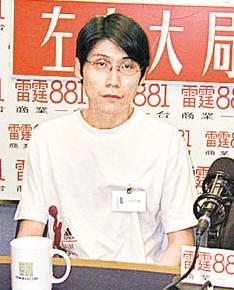 On the other hand her once divorced husband, who by nature likes to flirt around, is still sticking to his old habits and not giving her the attention that she deserves. Provoked into jealousy and anger, Hong decided to hire a young delinquent to beat up the object of her hatred - Xian-zai. As the previous attack did not cause serious injury to Xian-zai, the crime was not reported to the police. It only made the family more protective of Xian-zai. Unfortunately, that made Hong even more peeved. She felt she needed to make an even stronger statement to draw the attention of her nonchalant husband. Hong took out her savings and hired 2 thugs to teach Xian-zai a lesson he would never forget. Wielding cleavers that could easily inflict fatal injuries to any adult, let alone a young boy, the 2 thugs struck Xian-zai while he was returning home from school with his grandma.
 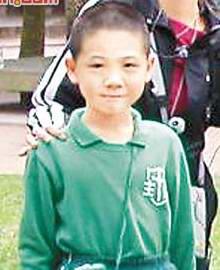 Now lying in hospital and slowly making a recovery, he could only listen in bewilderment as people tell him how his stepmom and all suspected accomplices got arrested by the police one-by-one. Xian-zai could not have imagined himself becoming the object of sympathy of the entire Hong Kong in a single day. Celebrity well-wishers have been visiting him in hospital and consoling the boy with all sorts of gifts. Child-cousellers have been appointed to relieve him of his traumatic experience. As for Hong, she would be charged with attempted murder, which warrants a life-sentence. Under a jury system swayed by public opinion, the HK courts would no doubt convict the young lady and all those men she hired to harm Xian-zai. These are the unwholesome fruits of her jealousy and anger. For her this mental prison transforms into a physical prison - proof of the Dhamma that one's enviroment is shaped by the state of one's mind. It is also important to note that this family tragedy is caused by Cen Weicheng's thoughts of lust (much like Ah How in Singapore), which often drove him to sexual misconduct.
 The Avatamsaka Sutra says:
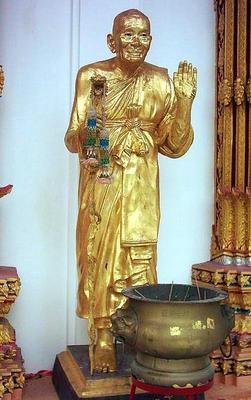
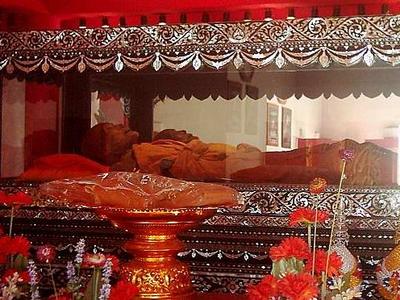 LP Tong looks as if he was sleeping, and other than the sunken facial features, one really cannot tell he has died for 5 years. According to the temple, his hair continues to grow and needs trimming every once in a while. This kind of phenomena is called "Flesh Body Buddha" in Buddhist terminology.
 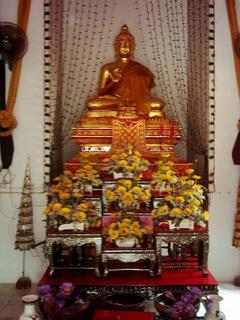 Only monks of high spiritual attainment can choose to keep their bodies in samadhi after they enter final nibbana. This is usually to serve a special purpose, because the normal tradition is to be cremated (like the Buddha) and the remaining relics be placed in a stupa or pagoda. Reports say that indeed there is such a special purpose in the case of LP Tong. Before he passed away, he had already left instructions for his disciples not to cremate his body. LP Tong wanted future generations of Buddhists from the whole region to gain confidence in the Triple Gems after seeing the miraculous aspects of the Dhamma through his undecaying body.
 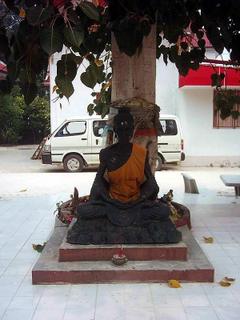 This alternative tradition is perhaps started by Maha Kassapa, the Buddha's foremost disciple who was also not cremated. According to the scriptures, Maha Kassapa flew inside Mount Kukkutapada (Chicken Foot Peak) and entered final nibbana there. His body will remain in eternal samadhi until the future Buddha Maitreya descends to Earth to teach the Dhamma many thousands of years later.
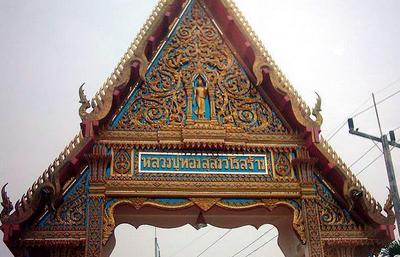
 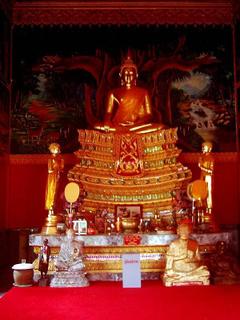 Coming back to the subject, LP Tong predicted that this small temple would become quite propserous with the bus loads of followers & tourists coming to see him after his death. Today, these words are proven right - Wat Pagor is thriving with pilgrims from Singapore, Malaysia & Thailand, who come daily to pay respects to him and ask for various blessings.
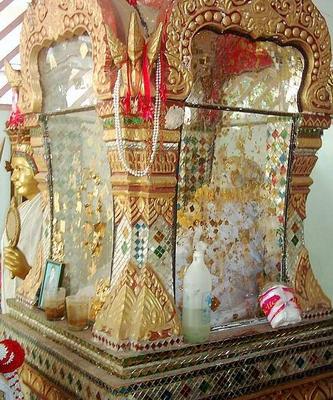
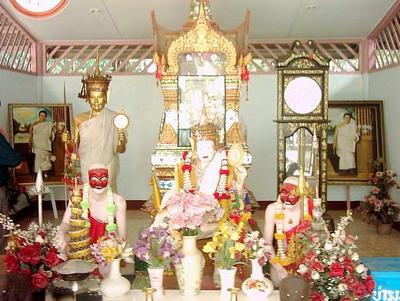 Besides LP Tong's undecaying body, I also got to see Maechee (Nun) Niam's skeletal remains. MC Niam was LP Tong's female teacher who had died decades ago. Out of respect for his teacher, LP Tong kept her body in a glass chedi to be venerated by himself and his followers. As I walked closer to take a look, I saw a dried yellowish skeleton in a seated position and garbed in the white robes of a non-ordained nun. Like the other countries of Theravada culture, Thailand does not have an order of Bhikkuni. Nuns could only take the 10 percepts and wear white robes instead of the saffron robes of the Sangha.
 Irregardless, MC Niam was known to be a compassionate Nun who observed vegetarianism throughout her holy life, although it was not required of monks & nuns in the Theravada tradition.
 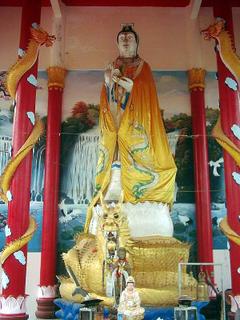 She is said to be able to grant the wishes of the faithful who pray to her, but they must also develope compassion and abstain from eating meat for a period of time. Paying respects to both LP Tong & MC Niam, one could not help but be filled with a profound sense of bliss. One regret I had was that I did not manage to meet LP Tong's successor, Abbot Maha Pairon when I went there; but rest assured I will be back for a future visit the next time.
  Reflecting on the undecaying bodies I've seen, I had an insight that although our physical body go through birth and death, happiness and suffering, sin and merit; our Buddha nature remains unmoving amidst all these. Everything we know, feel, experience, possess are ultimately unreal and does not belong to us.
 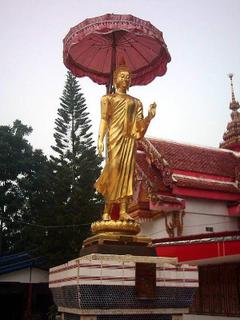 The Buddha is an illusionist turning an illusionary wheel of the Dhamma to teach illusionary sentient beings. If sentient beings attain any form of enlightenment, that is also unreal as there is nothing to realize and no suffering to end. What then is the absoulte truth, the true undecaying body which we cannot see? Meditate on this katha, especially the last verse, for the answer:
 This festival has it origins in the Mahayana Buddhist legend that on the 15th day of the 7th lunar month, the Buddha's disciple Mogallana, at the advice of the Lord, made offerings to the whole Sangha community in order to relieve his mother from her suffering in hell. Because of this great merit Mogallana's mother was indeed released from hell and was reborn as a deva. The Buddha was very pleased with Mogallana's fillial piety and praised him extensively for it, thus starting the tradition of "Ullambana".
  On this Ullambana day, future Buddhists would also make offerings to the Sangha for the benefit of their dead relatives. The Taoists, however, believe that on the 7th month the gates of the nether realm (including the ghost and hell realms - Taoists do not make a distinction) are opened for the ghosts to come up to the human world for a visit, and the humans, especially relatives, must make offerings to them to provide for their well being in the nether world, until they go back at the end of the month. This is called the annual "Zhong Yuan Pu Du" ceremony. The practice of burning joss paper and other models of material things comes from the Taoist tradition and not the Buddhist practice, because Buddhists normally offer more practical stuff like rice, clothing and other daily necessities to the Sangha, as well as conduct mass sutra chanting ceremonies to benefit all sentient beings in the lower realms.
 According to the Dhamma, the burned offerings can indeed reach the dead, but only if their relatives are still in the ghost realm. If they are reborned in other realms, like for example the animal or hell realms, those offerings would become futile. At least they are only of use to other non-related beings in the ghost realm. That also answers the 2nd question, which means to say that the ghost realm is indeed structured closely to the human realm. Although newbie Buddhists are often taught that the ghost realm means only a place where hungry ghosts with swollen bellies and needle like necks are always looking for something to eat, in reality it is not that simple. Just as the human world has humans with bad karma who suffer from hunger all the time, the ghost realm also has hungry ghosts with bad karma whose hunger can nevered be satisfied. On the other hand, there are ghosts with good karma who become chieftains with great power, assuming responsiblity over a large number of other ghosts in various regions, as described in the Ksitigarbha Sutra. In the same way, humans with good karma also become premiers or presidents and take charge of millions of humans in their own country. The only major difference between the 2 realms is that the suffering expreienced in the ghost realm is more intense as compared to the human realm, due to the definitive strong craving that burns the mind of a ghost. Thus there is no doubt that ghosts still need to use money, but they can only do so if their karma allows them to. From this you can see the limited use of making such paper offerings.
 If you truly wish to help your deceased relatives, no other method can be compared to making offerings to the Sangha (or the Triple Gems) and selflessly transfering all merit to them. Because this merit is so great, it can reach your relatives no matter which realm they are reborn in and no matter what bad karma they are suffering from. If they are in the lower realms they would be immediately relieved and if they are already in the higher realms they will be elevated to a even higher level of bliss.
 On a deeper level, the spirit of Ullambana teaches the Paramita (Bodhisattva path) of Dana (giving). Giving away material goods to the physical Sangha may produce merit, but this merit cannot be compared to the merit of giving away all your internal 6 sense organs, external 6 sensory objects and 6 sensory awareness in between to the spiritual Sangha, which is one with the absolute truth. This merit transforms your father (craving) and mother (ignorance) from the past, present & future into Panna (wisdom insight) and Upaya (skillful means), ultimately fulfilling the virtue of fillial piety as all delusion is melted into the ocean of Nibbana - all is one & one is all. This is the true purpose of Ullambana.
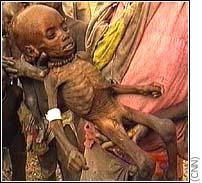
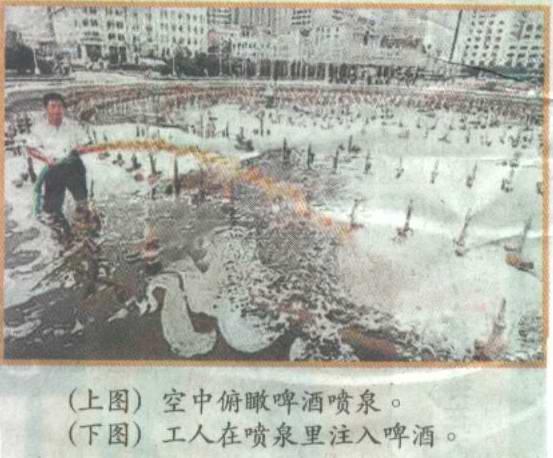
 This reminds me of the the last days of the ancient Yin Dynasty (around 1100BC), where the inhumane King Zhou built a Forest of Meat and Pool of Wine to frolic and swim in with his concubine Da Ji. Like the end of many dynasties, the last rulers were enjoying themselves totally without restraint whereas the people were starving and dying. Not long after that, the Yin Dynasty was overthrown by the Zhou Dynasty. Ever since that time, the Chinese idiom of "Wine Pool Meat Forest" has been used to describe the peak of decadence. Whenever any civilization reach such a stage, a revolution to overthrow it becomes inevitable.


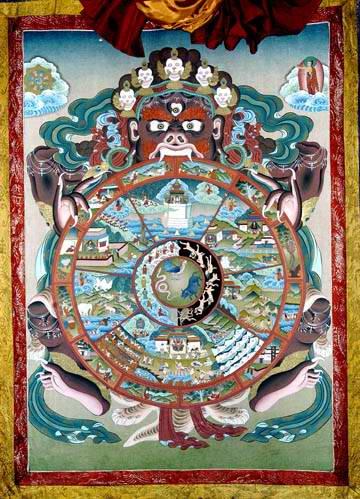
 In Leong SC's case, having worked most of his life away for family and children like most Singaporean men do, a secret lust to expereince something different also grew in his mind. This lust found its place in the person of Liu Hongmei, a nubile young lady from China working under him in the factory. Liu gave in to his advances and Leong succeeded in gratifying his lust. Feeling somewhat satisfied yet guilty, Leong spent a large part of what little money he had to fulfill whatever needs Hongmei has. However things quickly got out of hand when Liu decided to end this sinful relationship. Frugal by nature, and not wishing to let go, another poison arised in Leong's mind - Anger. Filled with Anger, Leong stole Hongmei's ATM card to take back some of the money he had given her. But his anger was not appeased and Leong murdered her the next day. How he dismembered her body in his own house and disposed of it in Kallang River is also history.