Tuesday, May 16, 2006

To be a True Victor

The Dhammapada says:

"Victory begets enmity,
The defeated dwell in pain.
Happily the peaceful live,

Discarding both victory and defeat."

The Dao De Jing says:

"The Sage does not compete,
Yet the world cannot compete with him."

Life is a constant struggle. As sentient beings, from birth we are thrown in all sorts of situations where we need to compete & to fight for survival. Whether it is for that scholarship in school, for the affections of the opposite sex, for that medal in sports, promotion at work etc.. the list is endless. It is easy to lose oneself in the competition of life & end up even worse off than before one started. Even if we are successful, we have to fight to maintain the success or be quickly replaced by those more able than us. This is an undeniable aspect of samsaric existence. Where then can the Dhamma be found? How can permanant happiness be attained in this endless struggle?

The answer lies in retuning the mind. Although we cannot avoid life's competitions, understand that the path to enlightenment does not lie in competition itself. To compete for first & last is the path of the deluded. To cling to victory & defeat is to fuel one's ego. With an ego like Mount Sumeru, how can one ever attain freedom from Samsara? You may even be invincible & defeat 1,000 warriors in battle, yet it will not bring you any closer to the end of suffering.

The only true victory lies in victory over yourself, over your own mental defilements like craving, hatred & ignorance. To overcome all duality like victory & defeat, birth & death, samsara & nibbana in the mind is the ultimate victory of the Buddhas. If you always remember this Dhamma during any competition, then you will always be the victor no matter whether you win or lose.

Monday, May 08, 2006

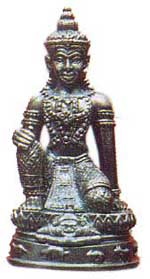
The Legend of Jatukam Ramathep

Once upon a time, many centuries ago (about 1700 years ago), it was a time of war and trouble. There lived a king and his princes in Central Siam. The elder prince named Jatukam and the other named Ramathep. After many years of war, the King finally conquered and managed to secure Sri Lanka into part of his Kingdom. There was a saying that the King possessed a sacred treasure, this was none other than the holy relics of Lord Buddha. Before the King began his journey to the newly conquered land, he tasked the protection of the relics to his two princes, & ordered them to guard it with their lives.

Some time later, the princes received information of plan by their enemies to capture the relics. They immediately informed the King in Sri Lanka. The King instruction was to quickly take the relics away by sea and head to Sri Lanka. Halfway through the journey, a thunderstorm struck and their ships were sunken. Except the two princes, the rest of the crew did not survive.

The two princes were washed ashore, but well. Without the sea transport, they could no longer bring the relics to Sri Lanka. They started praying sincerely to the relics, saying: “Dear Enlightened One! If this land we step upon is a holy piece of land, then please guide us let us live a new life here. With our people, we shall guard and protected your relics forever.”

Later the two princes built a temple on this holy land and with much hard work, they also establish a wealthy and strong city. They brought new hope and peace to all the people. In remembrance of the great deeds by the two princes, they named this place Nakhon Si Thammarat in their honour. This is now located in Southern Thailand at the present time. The temple that the two princes built for the relics is called Wat Mahathat - as it is known now.

Ever since then, after a few centuries, many people had travelled to Wat Mahathat to locate the relics that were buried by the princes. Finally, they found a stone carving and the relics buried at the Wat. The stories of the two princes were found engraved on this stone.

The two princes had done many great deeds and the greatest is by erecting the temple to house the relics. And they promised to guard the Relics with their lives. They had earned respect from both the heavenly and earthly beings. Later, the people combined the two princes into one and named him Tao Jatukam Ramathep when praying to him. Tao Jatukam Ramathep becomes one of the most respected and popular deities in the South of Thailand. In olden days, Tao was used to address noble ones. It is believed that those that pray to Tao Jatukam Ramathep will be blessed with fulfilling life and better in all aspects in everyday work. (End) Wat Phra Mahathat

The temple is located on Ratchadamnoen Road in Tambon Nai Muang, Amphue Meuang of Nakhon Si Thammarat province. This is one of the most important historical sites in Southern Thailand. The stupa, 55.78m high, has a distinctive Sri Lankan style. The top of the spire is entirely covered in pure gold. Inside the temple are many buildings of importance, especially the royal building which has beautiful architecture from the Ayutthaya period and the Sam Chom building, where the Buddha image garbed in royal attire - Phra Si Thamma Sokarat is housed. There are also the Phra Maha Phinetkrom (the equestrian image) building and the Thap Kaset building; while the Khian and Pho Lanka buildings are used to display artifacts donated to the temple by Buddhists from the whole region.

Over the doorway at the entrance of Wat Phra Mahathat in Nakhon Si Thammarat, there are the statutes of Tao Kadtukam and Tao Ramathep, the guardian deities of holy relics of the Buddha. The name of one deity is Tao Kadtukam, which later people understand that he is none other than Jatukam.

There are many stories on how the City Pillar (Lak Meuang) and the first Jatukam amulets were made. One story tells of Police Maj Gen Sanpetch Thammikun, the provincial police chief during the 1980s, going to Wat Nang Phraya during a shamanistic ritual. The medium, a woman, told the policeman to come back. When he did come back later the woman wasn't there, but had been replaced by a new medium claiming to be the spirit of the military leader for the B.E. 17th century Nakhon Si Thammarat king.

The police general came a third time, and the second medium claimed to be yet another spirit - Jatukam, who instructed him to lead the construction of a city pillar. However, the spirit advised him that first he should consult with Police Maj Gen Khun Pantarakrachadej (also known as Ajarn Khun Phan), who was thought to be a master of Buddhist magical arts (Puttakom). This is believed by some to be the reason why Jatukam Ramathep was chosen to be a model for the amulet images when the campaign to raise funds for the city pillar was launched. The city pillar was partly completed in 1986, and the original Jatukam amulets were made in 1987. It was circular pendant a five-centimetres in diameter, and was priced at 49 baht. Now many are sold for more than 100,000 baht each. In the past only very few Jatukam amulets were produced, but after Police Maj Gen Khun Pantarakrachadej (Khun Phan) passed away recently at the age of 103 (some say 108), the amulets again became very popular. It may be significant that his death on Sep 5th 2006 was just two weeks before the military coup in Bangkok. Since the royal cremation ceremony of Khun Phan last February, Jatukam amulets have become even more popular. But how long can the craze last?

Saturday, May 06, 2006

Do inanimate objects have Buddha-nature?

A Buddhist Poet once wrote:

"The green bamboo droves are the Dhammakaya;
The fragant yellow flowers are none other than Panna."

Taking this kind of expression literally, many later generation practitioners were misled to think that because the Buddha-nature encompasses all things, even inanimate objects possess such a nature. If Panna is the same as flowers, then doesn't that makes it non-sentient? If the Dhammakaya is the same as bamboo, then doesn't it becomes inanimate? So when we cook and eat bamboo shoots, are't we chewing on the Dhammakaya? What worth is there in seeking to attain these things if that is the case?

The scriptures say:

"Able to well distinguish all phenomena,
Yet remaining unmoved in the utmost meaning."

Understand that the Dhammakaya is the result of eons spent in perfecting our Sila, Samadhi, Panna & the rest of the Paramitas. It is the true body of all Buddhas, timeless, unchanging, omnipresent & all-knowing. How can such an unequalled attainment be inanimate & non-sentient? If inanimate objects have Buddha-nature, then how come none of them ever attain Buddhahood? According to such theory, then it is better for all of us to die now & become corpses; because corpses are inanimate objects; wouldn't that make us closer to becoming Buddhas?

The Buddha is right in front of you, yet you spend kalpas looking for him. Your whole being is the Dhamma, yet you seek the Dhamma outside of yourself. How foolish that is!

Contemplate on the 5th patriach Hong Ren's katha:

"With sentience we come to plant our seeds,
From fertile ground we are born;
Without sentience we have no seeds,
Neither will there be nature or growth."

Therein lies the true location of our Buddha-nature.

Monday, May 01, 2006

Birth, Aging, Sickness & Death

The Heart Sutra says:

"Seeing the 5 aggregates as empty,
Going beyond all kinds of suffering."

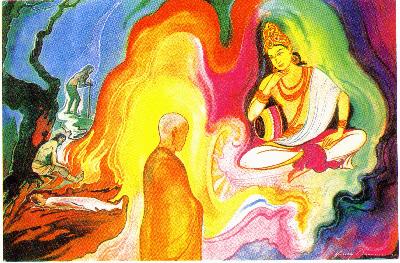
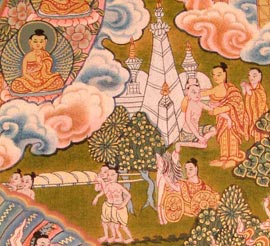
When Prince Siddharta first saw the 4 sights of an old man, a sick man, a corpse & a recluse, he immediately realized that all sentient beings have to go through the physical sufferings of aging, sickness & death without exception. But in the recluse, he saw that they might be a way out of suffering by taking up the spiritual path. That marked the beginning of his journey towards enlightenment.

Although we all have to be born, grow old, fall sick & die, but are these things inherently bad? It might not feel pleasant to experience these changes, but some have observed that there are those who are able to grow old gracefully, enjoy their "golden years", & also accept sickness & death comfortably without any mental anguish. In fact there are times that this changes offer release from other forms of suffering for some people. What then, is the true nature of birth, aging, sickness & death?
If you contemplate on these changes, you will gain the insight that good & bad, happiness & suffering is all in the mind. It has nothing to do with birth, aging, sickness & death - these are only natural processes for the physical body, which is by nature illusionary. To give an example, for those old folks whose minds are happy & contented, old age is a time of relaxing & enjoying life. But for those who are bitter & dissatisfied, it becomes a time of anxiety & regret.

When the mind is gripped by Avijja (fundamental ignorance), and controlled by the craving, hatred & ignorance that arises from it, then all changes in the body causes suffering in the mind because we wrongly believe this body to be "ours". But when Avijja is broken, the 3 poisons are transformed into Sila (discipline), Samadhi (concentration) & Panna (wisdom), which are the innate virtues of our Buddha-nature. Birth, aging, sickness & death are all transformed into skillful means to teach sentient beings who cling to such delusions about Dukkha (suffering), Anicca (impermance), Anatta (no-self) & Sunyata (emptiness). If they realize the body & mind are not worth clinging to, then we teach them that even the Dhamma is just a temporary medicine & also not worth clinging to. When they realize all-encompassing emptiness, we teach them that this very emptiness is not worth clinging to as it is Avijja itself! Only when they shatter this Avijja do they realize that they have in fact gone full circle - for they themselves are Buddhas! Everything comes back to your own mind, but are you aware of it?

Sunday, April 16, 2006

The Controversial Sangha Renpoche

The 5th Chan Patriach Hong Ren once said:

"If you are ignorant of your own true nature,
How can you hope to gain any merits?"

I just finished reading the famous Sangha Renpoche's autobiography, "I am such a Living Buddha" (see above). Interestingly, this book is recommended by many famous Buddhist leaders, intellectuals & celebrities alike. Sangha Renpoche, for those of you who are not familiar, is a young reincarnated Lama of the Kagyud tradition from Qinghai province in China, only 29 yrs old this year. He is controversial in the sense that he lives a double life, one as a revered Guru Lama & the other as a modern, fashionable & charisimatic yuppie. The Renpoche has openly admitted in his autobiography of his prolific lay life, featuring his sports car, branded clothes, pub-crawling & even his live-in affair with his Singaporean ex-girlfriend. Indeed, it is difficult to see how a person can expound beautiful Dhamma teachings to the multitude on the one hand, & yet live the high life of material enjoyments like any other rich young man on the other. Such behaviour may be unthinkable in the Theravada, debatable in the Mahayana, & might only be accepted in the Vajrayana tradition. After reading what the Renpoche has to say about the Dhamma as well as his inner struggles when faced with different choices in life (especially in the dept of love), I came to the conclusion that he is merely an ordinary man. He may be very well-versed with the Vajrayana teachings, & might have been reborn many times practicing the Dhamma; he may even possess a mystic aura & be respected like a living Buddha, yet he still has not seen the true nature of his mind. He is much like the U2 song: "But I still haven't found what I'm looking for.." Which is sad, actually. Sangha Renpoche says he is "a salesman of the Dhamma", & Buddhism is his "product"; so he has a duty to present it in its most upbeat & attractive image to his "customers". And what better way to advertise his product than to advertise through his own self? But such thinking is inherently problematic, because of the profound & inconceivable nature of the Dhamma. It is of course not a problem to walk freely between the sensual & spiritual world if you are enlightened, where duality is no more; but what happens when you are not? How can you confidently say sensual pleasures are empty & cannot taint your mind when you have not realized the supreme Dhamma? Remember the story of Kumarajiva giving a warning to his disciples? It is indeed a dangerous path to tread if you have not reached that kind of level. Judging from his writings, there is no doubt that Sangha Renpoche is still in the realm of duality. Even he himself admits that he is but a man, & enlightenment has not been reached.
The Renpoche explains that "all things arise due to dependent origination" & he cannot avoid those worldly trials due to past karma. If such is the case, why choose the path that is full of traps? Why not avoid this path altogether and stick to the safe shelter of the Vinaya? Only when you have broken Avijja can you throw away the guidance of the Vinaya, the Dhamma & all the scriptures, for by that time you will realize all the teachings are already present in your own Buddha-nature. Then you can choose to roam the world and live either the religious or the material life without any obstacles. To Sangha Renpoche, I only have this to say: stop creating the karma of birth & death; seek that which is beyond birth & death within your own mind. May he quickly reach the doors of the deathless, sadhu.

Thursday, March 23, 2006

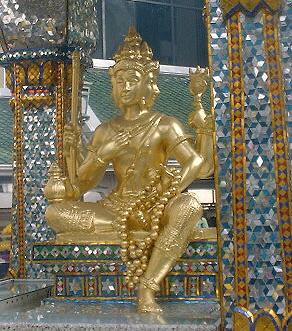
Destruction of Pra Prom Erawan

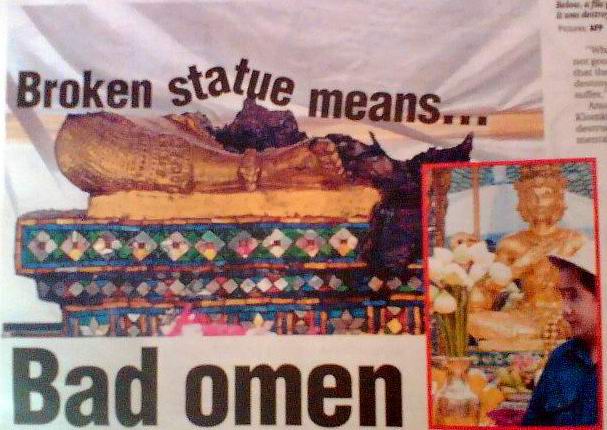
As most of us already know, 2 days ago (21.3.06) a mentally-deranged man hammered the much-revered statue of Pra Prom or Brahma creator god at the Hyatt Erawan Hotel in Bangkok and reduced it into rubble. Only the part of lap and base of the statue were left intact. Its head was broken and fell off to the ground. Officials have since put up white cloth to hide what is left of the statue. The man was later identified as Thanakorn Pakdeepol, 27, a Muslim. While he was trying to escape, some taxi drivers and people near the scene caught up with him started to beat him up. The madman died from his injuries about 50m away from the Pra Prom shrine.
Although astrologers predict bloodshed and bad times ahead from the destruction of the revered Brahma statue in central Bangkok, what I'm more concerned is the possible backlash against the Muslim population in Thailand, even though the culprit is insane and could not be held totally responsible for such an act of terror. He might be dead, but the result of his actions will have far reaching effect on religious sensitivities in the kingdom. Given the political turmoil that is already shaking up the country currently, the situation could very well turn worse if further religious conflict enter the picture at this time.

As Buddhists, we must view this happening with a calm mind, reflecting on the impermanance of all external phenomena. See that all the Buddha images in our world, no matter how holy they are, are not the real Buddha. The real Buddha is in our heart and it is this Buddha-nature that is truly indestructible like diamond. Even when the whole world is burned up by fire at the end of the Maha Kalpa (great eon), the Buddha-nature remains the same as always. Throughout history there had been persecutions on Buddhism; countless temples, pagodas, images & scriptures had also been destroyed as a result. But the Dharma was able to survive to this day because it always lived in hearts & minds of the people no matter what happened. Pra Prom or Brahma is not so much about a Creator Deity, but about the 4 immeasurables he represents - Universal Love, Compassion, Joy & Equanimity. These are are also the inherent qualities that makes a person immortal even though his physical body may die. Seek these immeasurables in your heart and Brahma will forever be present in you, sadhu.

Thursday, March 16, 2006

Anger & Merit

Shantideva, one of the great Mahayana sages, once said:

Good works gathered in a thousand ages,
Such as deeds of generosity,
Or offerings to the Blissful Ones-
A single flash of anger shatters them.

Why does anger destroy all the merit you ever accumulated?

Because it is you!
In the same way that eons of ignorance can be banished by a single moment of enlightenment, ages of merit can similarly be destroyed by a moment of anger.
Anger is you, love is you, merit is you, sin is also you. It is still the same one mind, but use it for anger, and it becomes hell. Use it for love, and it becomes heaven. Use it for ignorance, it becomes sentient beings; use it for enlightenment, and it becomes Buddha. Whether merit or sin depends on how you use this one mind; but at the end of the day, nothing is created, nothing is destroyed. It is just you.

Don't you see?

Wednesday, March 08, 2006

Are ghosts & demons afraid of chanting?

Some people believe that when you are disturbed by ghosts, spirits & demons, chanting sutras, mantras or names of the Buddhas & Bodhisattvas will protect you. They think that it is the Buddhas, Bodhisattvas or guardian deities who will drive the evil beings away, but that's utter nonsense.

Such beliefs originate from an unenlightened mind. Chanting or recitation does not scare ghosts, spirits or demons! It is the enlightened mind that they truly fear. What are these evil beings? They are merely our own craving, hatred, ignorance, jealousy, pride & doubt. What are kathas, mantras, names of Buddhas & Bodhisattvas? They refer to different aspects of our own Buddha-nature. They are also fingers pointing to the Buddha-nature, directing us to return to the true mind. Where are all those Buddhas, Bodhisattvas & guardian deities? They are all there, right inside our Buddha-nature. When we return to the true mind, those defilements mentioned above are all absorbed back into the absolute & dissappear without a trace. They stand no chance just as snow flakes stand no chance inside a hot stove. This is what really scares the ghosts & demons!

Thus do not seek protection from evil outside yourself, for evil is your own mind, & all protection is also within your own mind.

Nagarjuna's stanzas

"In some things be like trampled grass.
In some things be like blazing fire.
In some things labour like a slave.
In some things remain as immovable as a mountain."


What does these verses of the great Nagarjuna, father of the Mahayana tradition mean?

Trampled grass refers to the perfect patience of the Buddha-nature. Like when King Kali angrily cut off the limbs of Rishi Ksantivadin (one of the Buddha's past life) with his sword, he felt no anger towards him. Or when Ven Hui Ke chopped off his own arm to seek the highest doctrine from Bodhidharma, he too felt no regret at all for that sacrifice.

Blazing fire refers to the the Samadhi fire of the Buddha-nature, able to burn away all klesha (defilements) and tranform them into pure Prajna (wisdom). Whatever klesha that arise in the mind is caused by Avijja (fundamental ignorance). When Avijja is shattered, all klesha are melted back into the true mind & becomes its manifestation bodies.

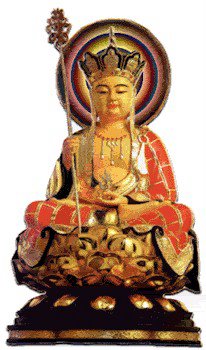
Labouring like a slave refers to the untiring nature of the Buddha-nature, for it is devoid of any concept of self or something belonging to a self. Like the Bodhisattva Ksitigarbha, who vowed never to attain Buddhahood until all the hells are emptied, the Buddha-nature also works tirelessly to transform all sentient beings in the mind into Buddhas.

Immovable as a mountain refers to the admantine nature of the Buddha-nature, for despite being able to see & know all things, remains unattached & unchanged throughout all time & space.

So u see all Dharmas are not apart from the Buddha-nature. Once u see your own true mind, you will be able to understand all the teachings of the Buddha, sadhu.

Sunday, February 26, 2006

The Nature of Thought

The Ksitigarbha Sutra says:

"Whenever thoughts arise in the minds of sentient beings in Jambudvipa, they are all but sinful. If by chance they happen to gain some benefits, they often retrogress from their initial wholesome mind. In evil conditions, evil thoughts grow successively one after another."

This is a well known passage in the Sutra but people often misunderstand it, thinking that we sentient beings are all born in sin, not unlike what is taught in Christianity.

Thought arising in the mind is evil not because sentient beings are evil or thought itself is evil, but only because it is tainted by our fundamental ignorance (avijja). When Avijja is in control of our mind, thinking, not thinking, between thinking & not thinking, neither thinking nor not thinking are all klesha (defilement). But when Avijja is shattered, thought IS the Buddha!

Using a good thought (eg. thinking of Amitabha) to conquer evil thought is an expedient means taught by some Pureland Buddhist teachers, but it won't be very effective unless you understand the nature of thought. Amitabha refers to the Buddha-nature, and in the Buddha-nature there is no good thoughts or evil thoughts. No pure or impure thoughts, no right or wrong thoughts, no thought & no no-thought. All these are still in the realm of duality & are thus unreal. If you can think of Mara in the same way you think of Amitabha or Buddha; think of evil thoughts as fundamentally no different from good thoughts, then that can be called true "Nian Fo", "Nembutsu" or Buddha thought.

善念恶念,皆是妄念,
有念无念,无非魔念;
即念离念,亦不断念,
念佛念佛,念即是佛!

Good thought evil thought, all are false thoughts.
Have thought no thought, not apart from evil thoughts.
Think thought leave thought, do not cut thoughts.
Think Buddha think Buddha, thought IS Buddha!

Tuesday, February 21, 2006

More Zen Koans for contemplation

1. Bodhidharma and the Emperor Wu

Emperor Wu of China was a very benevolent Buddhist ruler. He built many temples and monasteries, educated many monks, and performed countless philanthropic deeds in the name of Buddhism. He asked the great teacher Bodhidharma, "What merit is there in my good works?" Bodhidharma replied, "None whatsoever." The Emperor then asked, "What is the highest meaning of the Noble Truths?" Bodhidharma answered, "Vast Emptiness, devoid of Nobility." The Emperor then queried, "Who, then, is this confronting me?"
"I do not know," was Bodhidharma's reply.
Since the Emperor did not understand, Bodhidharma left his kingdom. Later, the Emperor related this conversation to an adviser, Prince Shiko. Shiko reprimanded him, saying that Bodhidharma was a great teacher possessed of the highest truth. The Emperor, filled with regret, dispatched a messenger to entreat Bodhidharma to return. But Shiko warned, "Even if all the people in the land went, that one will never return."

*For this Koan, meditate on "I do not know". If you know what is it that is not known, you will see your own Buddha-nature.

2. Seijo's Two Souls

Chokan had a very beautiful daughter named Seijo. He also had a handsome young cousin named Ochu. Joking, he would often comment that they would make a fine married couple. Actually, he planned to give his daughter in marriage to another man. But young Seijo and Ochu took him seriously; they fell in love and thought themselves engaged. One day Chokan announced Seijo's betrothal to the other man. In rage and despair, Ochu left by boat. After several days journey, much to his astonishment and joy he discovered that Seijo was on the boat with him!
They went to a nearby city where they lived for several years and had two children. But Seijo could not forget her father; so Ochu decided to go back with her and ask the father's forgiveness and blessing. When they arrived, he left Seijo on the boat and went to the father's house. he humbly apologized to the father for taking his daughter away and asked forgiveness for them both.
"What is the meaning of all this madness?" the father exclaimed. Then he related that after Ochu had left, many years ago, his daughter Seijo had fallen ill and had lain comatose in bed since. Ochu assured him that he was mistaken, and, in proof, he brought Seijo from the boat. When she entered, the Seijo lying ill in bed rose to meet her, and the two became one. Zen Master Goso, referrring to the legend, observed, "Seijo had two souls, one always sick at home and the other in the city, a married woman with two children. Which was the true soul?"

*For this Koan, meditate on which was Seijo's true soul.

3. Ganto's Two Meals

Kisan paid a visit to Ganto, who was living in quiet seclusion, and asked, "Brother, are you getting two meals regularly?" "The fourth son of the Cho family supports me, and I am very much obliged to him," said Ganto. "If you do not do your part well, you will be born as an ox in the next life and will have to repay him for what you owed him in this life," Kisan cautioned.
Ganto put his fists on his forehead but said nothing. "If you mean horns," Kisan said, "you must stick out your fingers on top of your head." But before he finished speaking, Ganto shouted, "Hey!" Kisan did not understand his meaning and said, "If you know something deeper, why don't you explain it to me?" Ganto hissed at him and said, "You have been studying Buddhism for thirty years, as I have, and you are still wandering around. I have nothing to do with you. Just get out." And with these words he shut the door in Kisan's face.
The fourth son of the Cho family happened to be passing by and, out of pity, took Kisan to his home. "Thirty years ago we were close friends," Kisan said sorrowfully, "but now he has attained something higher than I have and will not impart it to me."
That night Kisan could not sleep. He got up and went to Ganto's house. "Brother," he implored, "please be kind and preach the Dharma for me." Ganto opened the door and disclosed the teaching. The next morning Kisan returned home, happy with attainment.

*For this Koan, meditate on what are the 2 meals.

4. Everything is Best

One day Banzan was walking through a market. He overheard a customer say to the butcher, "Give me the best piece of meat you have." "Everything in my shop is the best," replied the butcher. "You can not find any piece of meat that is not the best." At these words, Banzan was enlightened.

*For this Koan, meditate on what is the best meat.

5. Where to Meet after Death

Dogo paid a visit to his sick fellow monk, Ungan. "Where can I see you again if you die and leave only your corpse?" Dogo asked. "I will meet you where nothing dies," Ungan replied. Dogo criticized his response saying, "What you should have said is that there is no place where nothing is born and nothing dies and so we need not see each other at all."

*For this Koan, meditate on what is the place where nothing is born or dies.

Thursday, February 02, 2006

The Conditions of the Devas


There are 3 classes of Devas or gods in Buddhist cosmology. The first kind are the formless devas in the formless heavens (arupa loka), who have no desire nor body, only pure mind. They enjoy the sublime bliss of the formless Jhanas & have extremely long lives (up to 84,000 Maha Kalpas or great eons), which gives these devas the illusion of eternal life. The second kind are the devas of form, who have bodies but no desire. They experience the pure bliss of the 1st to the 4th Jhana. Brahma devas belong to the the lower heavens of form (rupa loka) & there's no male & female distinction in this realm. Their bodies are sexless & are made of pure radiance. They also have very long lives (up to 16,000 Maha Kalpas). The last kind are the devas in the heavens of desire (kama loka), like the Tavatimsa or Tusita heavens, which have male & female distinction - meaning that these devas still have sex, but in a much more refined way compared to humans & animals. Different devas in the different heavens of desire have sex in different ways. For example those in the heaven of the 4 kings & the Tavatimsa simply let their spiritual energy mingle. Those in the Yama heaven only need to go close to each other. Those in Tusita heaven simply hold hands & those in the Nimmanarati heaven only have to look at each other! These devas are constantly enjoying great sensual pleasures which are the fruits of their good karma. Though their lives are relatively short (millions to billions of years) as compared to the devas of form & formlessness, but it's still a very long time to us humans.

When devas are going to die, they first show the 5 minor signs of decay, followed by the 5 major signs, after which they will immediately fall to the lower realms. This applies to all devas in the heavens of form & desire alike, no matter whether they are sexless, male or female.

The 5 minor signs are:
1. They no longer hear divine music.
2. Their radiance becomes diminished.
3. Water start to wet their bodies.
4. They start to miss the heavenly enjoyments.
5. Their divine sight could no longer perceive the entire world.

The 5 major signs are:
1. Their celestial robe becomes unclean.
2. Their crown of flowers wilt.
3. Sweat start to flow from their armpits.
4. Their bodies start to smell.
5. They start to become very agitated.

For the formless devas, they do not expereince these signs cos they have no bodies, but once their time is up, their minds will lose the bliss of the formless Jhanas & thus dissappear from that realm to be reborn into the lower realms.

So u can see that it is difficult for devas to cultivate the Dhamma bcos the bliss or enjoyments in the heavens are so great that often devas don't think of the Dhamma until it is too late (when the 5 major signs of decay appear). In the same way, humans who have a lot of money & pleasure will never think of practicing the Dhamma until they are old & dying. By that time, it will probably be too late. Thus the best condition to practice the Dhamma is not to be a deva or human with an easy life, but just a normal person that have experienced some degree of suffering. Only those who know suffering will have a heart to seek the end of suffering that is Nibbana.

Tuesday, January 31, 2006

The First Humans on Earth

According to the Aganna Sutta of the Digha Nikaya, the first humans that appeared were Devas from one of the heavens of form, the Abhassara heaven. Millions of years ago, when there were no humans on Earth yet, a group of devas descended down from the Abhassara to explore this land. During this time some of them ate and developed a craving for a naturally abundant crop down here. But after having ate this earthly food their subtle bodies became coarse and heavy, such that they were no longer able to fly back to their heavenly abodes; so they had no choice but to stay on earth as humans. From this group those with stronger craving became females and those with lesser became males. With males and females, they started to reproduce and populate the Earth. Those other devas whose good karma were exhausted like them were also reborn down here as humans.

Some people are also puzzled as to why the human population keep increasing if each being had only one consciousness. They forgot that besides the human realm there are also beings from the Deva, Asura, Animal, Ghost and Hell realms. They also forget that our world (called Jambudiva) is not the only world in the universe. Humans who do enough good karma get to be reborn as a deva, but this is a small number as compared to devas who used up their good karma & be reborn as humans. Those beings in the lower realms who have exhausted their bad karma were also reborn as humans, but this is also a relatively small number compared to humans who fall into those realms. Why is that so? Simply bcos the upward climb to the higher realms is always more difficult than the downward descend into the lower realms. That's why there are much more animals than humans.

Also considering the fact that beings from other worlds who share collective karma with the beings in this world get reborn here as well, so the number of people on earth can only go up!

Saturday, January 28, 2006

Can a person be reborn in 2 or more bodies?

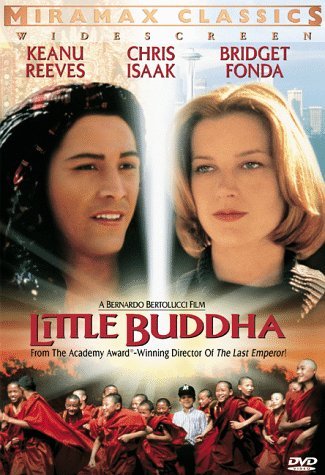
In the old movie the "Little Buddha", the main character of the story (the little boy) was said to be 1 of the 3 reincarnations of a great Tibetan Lama. Many Buddhists wonder if this kind of thing is possible. Cynical people don't even believe in rebirth, let alone multiple rebirths. Still others form preconceptions about this based only on reading or hearsay.

Brothers & sisters, it is not wise to form conclusions about this topic based on book knowledge or preconceived ideas on the nature of reality. Unless you have attained the supernormal power of seeing into past lives or seen your own true mind (through meditation), you would not really know for sure whether this is possible.

We must look at this from 2 viewpoints - the sentient being & the enlightened being. For sentient beings we can take the simile of a candle being used to lit another candle. At any one time the present candle can be used to lit only one other candle, because this delusional mind still clings to a single body as a self.
For the enlightened being, the mind is the Buddha-nature, & for the Buddha nature, one is all & all is one. The Buddha-nature can be one candle, & can also be many candles, in fact even infinite number of candles that can all be used to lit other candles. In the absolute mind there is no concept of time, space or numbers; because from the viewpoint of the absolute, all time, space & numbers are also not apart from it. That is how the Bodhisattvas can be reborn in many manifestations at the same time. Although they appear to be reborn, in reality nothing is born or dies. It is like an illusionist who creates many illusionary beings. Can these unreal beings be said to born & die? Likewise, manifestations of the enlightened ones appear & disappear all the time for the sake of teaching sentient beings, but the Buddha-nature remains unmoved.
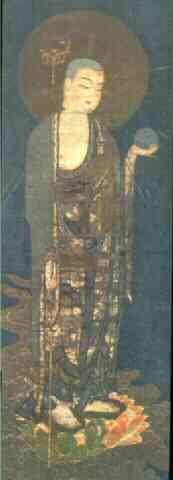
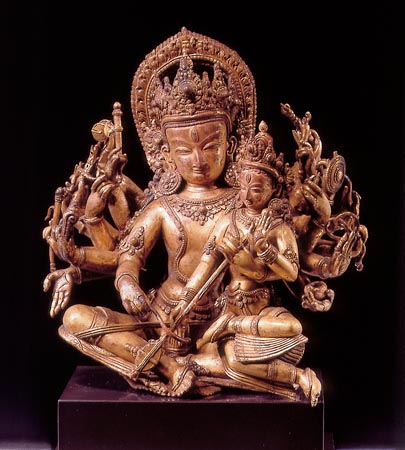
This is Dhamma from the unborn mind; hope it will clear your doubts, sadhu.

Monday, January 23, 2006

The true meaning of Ksitigarbha's vow

Most of us may have read the Ksitigarbha (Dizang) Sutra & know the great vow of Bodhisattva Ksitigarbha: "If the Hells do not become empty, I will never attain Buddhahood." Given the unsurpassable willpower & intensity of such a vow, many Buddhists doubt whether it can ever be realized or is it even practical at all.

Please listen to me; do not doubt the true words of the Great Bodhisattvas, for in reality they ARE already Buddhas, but merely appear as Bodhisattvas to better help sentient beings. Dizang or Ksitigarbha refers to the untiring determination to save all sentient beings, which is an aspect of your own Buddha-nature. The Avatamsaka Sutra says:

"Such as the True Thusness, which is by nature untiring."

The Buddha-nature is untiring bcos there is neither a concept of a self nor something belonging to me. With this pure mind, it is omnipresent in all the Buddha Lands in the 10 directions. The Hells does not exist elsewhere, but they refer to the burning thoughts of craving & anger within your own mind. Sentient beings are not outside of you, but they refer to the countless klesha (defilements) that arise from your own fundamental ignorance to cloud your true mind. As long as ignorance is not broken, suffering & samsara will continue to exist forever.

When Ksitigarbha vowed not to attain Buddhahood until all the hells are empty, he is really saying that one can never see one's own Buddha-nature until craving & anger is conquered; one cannot attain enlightenment until all the klesha that cloud your mind is transformed. And the only way to do this is to attack the source of craving, anger & all klesha - Avijja or fundamental ignorance. If you can break this Avijja and realize the Absolute, then you will be no different from Ksitigarbha, Avalokitesvara & all the Buddhas & Bodhisattvas in the 10 directions.

Is it possible to be a Lotus amidst the Flames?

To be a Lotus amidst the Flames means to live an impure life, yet remaining completely pure in the heart. Many Bodhisattvas who have realized the Unborn Dhamma choose this as an expedient method to teach sentient beings who have unwholesome livelihoods. In the Avatamsaka Sutra, there are many such examples among the 53 teachers that Sudana sought out to learn the Supreme Dhamma. The courtesan Vasumi is one of the most notable ones, as I have mentioned before in previous writings. But before you think you can follow in the footsteps of these enlightened beings, consider this story first:

In the past when the great translator Kumarajiva was forced by the Emperor Yao to take several palace maids as consorts, he relented & allowed the girls to serve him. The emperor's intention was for Kumarjiva to have blood descendents to continue his line, such that his teachings will live on through his children. Kumarajiva, of course, had other plans. However this caused his disciples to think that "Oh, even our master is living with women, so is it not ok for us to give up our vows of celibacy too?" Knowing their thoughts, Kumarajiva assembled all his disciples, took a bowl of needles, & swallowed all the needles right before their very eyes! He then said "I know what u are all thinking. If any of you could swallow this bowl of needles and remain unharmed, then you are welcomed to follow what I'm doing now." Stunned, none of them could utter a word. Kumarajiva then used his spiritual power to expel all the needles from his body through the pores of his skin. Only then did the disciples understood what does it really mean to live in defilement & yet remain undefiled.

Are you able to do likewise? If not, it will be much wiser to keep to the safe shelter of the percepts on your journey towards enlightenment.

Tuesday, January 10, 2006

Retribution for Killing: A True Story

The Shin Min papers carried an interesting article on 7.1.06 abt a woman in Ipoh, Malaysia who gave birth to a "Snake Girl" after killing a snake in the vegetable plantation when she was pregnant. This woman believed she had offended a Snake Spirit, and she would carry this regret with her until her last day. The Snake Girl that is her retarded daughter is now 29 yrs old. From young she refused to wear any clothes and constantly twirls her tounge out like a snake's tounge. After she's fully fed she would coil herself up like a snake and go to sleep (see above)!
This Snake Girl was named Wen Jinlan by her mother, Yang Yamei (60 yrs old); not that a name had any meaning at all to her. Whenever her family tried to dress her, she would angrily tear up her clothes and throw them far far away, much to her mother's frustration. As Mdm Yang's husband is old (72 yrs) and in ill health, she had no choice but to get help from the Petaling Guanyin Temple. The temple managed to get the Ipoh Disabled Children's Home to take Snake Girl in. Last week Mdm Yang had finally taken Snake Girl to the home. Although she is 29, she looked no older than a teenage child, and is less than 4 feet tall. Still refusing to wear clothes, the mother had somehow put Snake Girl in a pair of shorts. After being hand-fed by her mother, Snake Girl lazily coils up on the floor to sleep, legs in the air & tounge still slithering.
Besides Snake Girl, who is Mdm yang's eldest daughter, she had also given birth to 6 other children. But they all suffered some form of misfortune; her 3rd son had gone missing for many years, the 5th son suffered from insanity and the rest of the children all lived hand to mouth. Mdm Yang knew this is her bad karma and had resigned herself to her fate.

The chairman of the Disabled Children's home, Mr Zhang Guoliang, sympathized with her and said they would take care of Snake Girl. But she must learn to dress herself and Mr Zhang would get the staff to slowly re-educate her into more human behaviour.
_________

This true story tells us that very often, those sentient beings that you have gravely offended in this life or in past lives can and will come to take their revenge on you when the opportunity arrives; and what better way to do this than to become your children! Children are born into our families all for a karmic purpose; either they are your creditors or your debtors. If they are the former, then you have no choice but to clothe them, feed them, raise them to pay pack, and yet still be abused or even killed by your own flesh and blood if their hatred is deep enough. Of course, in taking revenge these beings create even more negative karma in the process. Although they cause their parents to suffer, they themselves stand a high chance of falling into the Hells when they die. Especially if they commit the Parajika sins ie. kill their own parents, they will be reborn into Avici Hell where they will suffer unspeakble torment for countless eons.
Terrible indeed are the fruits of hatred and revenge, for it is a raging fire that burns both debtor and creditor alike without discrimination. It is a vicious cycle where nobody stands to gain anything at all in the whole painful process. The only way for sentient beings to break this samsaric cycle is for one party to give up the hatred in his or her heart and for the other party to sincerely seek forgiveness. Throughout the eons of samsaric existence, all of us have made innumberable enemies in ignorance and therefore we are both creditors and debtors in one body. The wise Dhamma practice is to constantly douse with Metta (loving-kindness) all thoughts of hate that arise in the delusional mind, and at the same time seek forgiveness from all sentient beings that we might have trangressed in our past and present lives. Observe the percepts, guard the mind so as not to make any more future enemies. In this way, with our enemies gradually reduced, the path to enlightenment will become smooth. Let us have unwavering faith in the Triple Gems, sadhu.

Friday, January 06, 2006

The Possiblity of Enlightenment in 1 lifetime

The Chan school of Buddhism, first brought to China from India by Bodhidharma, is the first Mahayana school that teaches the possiblity of attaining Buddhahood in this very life. The heart of enlightenment has been passed down from the past Buddhas to the Patriarches, and from the Patriarches down to monks and lay people alike. Whoever was ready to be awakened received instruction on the Absolute Dhamma from the Chan masters without discrimination. Of course, there were many teachers from other schools opposed to this aspect of Chan, and furthermore they also could not bring themselves to believe sudden enlightenment is possible.
Even up to today, renowned Buddhist scholars like Ven Shengyan from Taiwan also share this kind of thinking. The ironic thing is that he himself is a Chan Master who professes lineage from the Caodong (Soto) branch of Chan Buddhism. He once wrote in his book "The Orthodox Beliefs of Buddhism" that "The enlightenment of Chan is not equal to attaining Buddhahood. At most it is only equal to attaining the pure Dharma eye; which is the Sotapanna (stream-entry) stage of sainthood in Theravada or the first Bhumi (plane) of enlightenment in Mahayana."
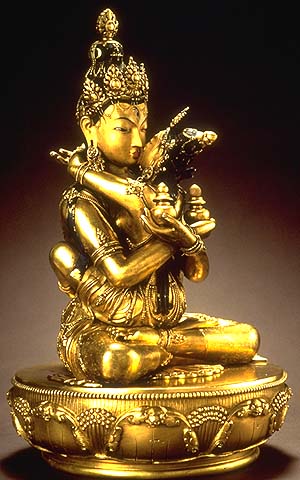

He goes on to say that "If we consider this from the Tiantai school viewpoint, then a Chan practitioner who has passed through the 3 stages of practice is only at the Resemblance State of enlightenment (4th of the 6 states of enlightenment in Tiantai theory). Even after they have broken through the black pit of Avijja (fundamental ignorance), they still need to become hermits to continue cultivating their sainthood. At this point they would have only completed one of the 3 Asankhya Kalpas (immeasurable eons) required to reach Buddhahood."

Sorry to say, I totally cannot accept such statements from a famous teacher like him. Ven Shengyan's misguided views on enlightenment reminds me of a certain Vinaya master named Yuan who challenged Ven Huihai on the same subject. This was how it went:

Yuan: Chan masters keep saying that "this very body is the Buddha", I think this is unacceptable. Because the scriptures say that Bodhisattas who have reached the 1st Bhumi are able to manifest themselves in a hundred Buddha worlds. Those who reach the 2nd Bhumi have this power increased ten-fold. Why don't the master (refering to Hui Hai) try showing me some of this supernormal power?

Huihai: Acariya (teacher), are you yourself an ordinary person or a saint?

Yuan: I'm still an ordinary person.

Huihai: If you are an ordinary monk, how can you understand such states? The scriptures say, "Virtuous one, concepts of superiority & inferiority exists within your mind, and they are not in line with the Buddha's wisdom." This exactly describes you!

Yuan: Chan masters say that "If you realize the Dharma, with this very body you are liberated". I think this is unacceptable too.

Huihai: If a person does good throughout his life, but suddenly steals something into his hand; is he a thief in this very body?

Yuan: Of course.

Huihai: So if I clearly see my own Buddha-nature now, why can't I be liberated?

Yuan: Not right now, you still need to pass through the 3 Asankhya Kalpas before you can attain complete liberation.

Huihai: Can you count Asankhya (something immeasurable)?

Yuan: Then when you compared theft to liberation, is that comparison rational?

Huihai: Acariya, if you cannot see the Dharma, do not obstuct everyone from understanding it. If your eyes are closed, do not hate everybody who is able to see things.

At this, Yuan left in anger, saying that Huihai was an old fool without any Dharma. Huihai remarked "that" which had left is Yuan's Dharma. (end)

I feel sad for Ven Shengyan for he clings to doctrinal concepts which are only words, and presumptiously judges the wisdom of the past Buddhas & Patriarches with them. The scriptures say: "Do not slander Panna, for such a sin is limitless." It is indeed dangerous to try defining the Buddha-nature by mere scriptural knowledge instead of directly seeing it in your own heart through meditation. The Sutra of Complete Enlightenment says:

"Good man, the heart of complete enlightenment of all Buddhas is devoid of Bodhi & Nibbana; neither is there a concept of attaining or not attaining Buddhahood, not even a concept of false Samsara or not Samsara exists. Good man, even all the enlightened Savaka Arahants, with their mind, body & speech gone into extinction, cannot fathom the Nibbana that I have attained on my own. What more for ordinary people, with their conventional thinking, trying to define the completely enlightened state of the Tathagata? This is like trying to use a firefly's flame to burn Mount Sumeru - totally impossible to set alight. Or with the Samsaric mind producing Samsaric views, trying to enter the Tathagata's ocean of Nibbana - also completely impossible to reach. That is why I preach to all Bodhisattas & future sentient beings: destroy the root of Samsara (Avijja) that is without beginning first."

Thus, one must believe that Enlightenment is possible in 1 lifetime. The Supreme Dhamma is in each and everyone of us, and if you are determined enough to see it, it will reveal itself to you when the time is ripe. The transmission of Chan is beyond words & concepts. If Ven Shengyan forsake his book knowledge and look hard within his mind, he too will see the Buddha-nature one day, sadhu.

Sunday, January 01, 2006

Sex in Buddhism: To avoid or not to avoid

The scriptures say:

"If the mind is transformed by phenomena, that makes us sentient beings.
If phenomena is transformed by the mind, then we are no different from the Tathagatas."

In the conventional Buddhist view, we are taught to shun sensual objects like sex, wealth & power etc. for their impermanant & corrupting nature. That is fine & good for treating people who has a strong craving to these objects, but the problem comes when they start to cling to the very Dhamma that frees them from such craving. They become dogmatic and mistakenly believe that only the total elimination of sensual craving can lead them to Nibbana. But in actual fact, they have strayed from the Dhamma and because of their clinging, their true mind is still obscured by Avijja or fundamental ignorance. Most Savaka practitioners fall into this category.

But in reality, abstinence & indulgence are 2 sides of the same coin. If one cannot see through this duality, then neither choice can lead you to enlightenment. To have sex or not to have sex is not relevant in the highest Dhamma - because in the absence both craving & aversion, all physical activities are enlightened in the first place. In this case, rather than saying we are part of the sensual world, it is more appropriate to say the sensual world is part of us - part of enlightenment.

Some will say that I abstain from impure sensual pleasures to seek the pure pleasure of meditation, or Jhana. But even though the pleasure of Jhana is not of a physical sensual nature, but it is still pleasure, albeit a mental kind. But this is still not the highest pleasure; for the mind, consisting of the 4 aggregates, is unreal in itself. Frankly speaking, in terms of unreality, there's no difference btw sensual & jhanic pleasure. Such being their nature, what is there to avoid or grasp to?

Just as clinging to sensual pleasure binds one to the realm of desire, they forget that clinging to jhanic pleasure binds u to the realm of form, or if one attains the immaterial jhanas, the realm of formlessness. If a practitioner abandons sensual pleasure, only to pursue jhanic pleasure, he still has not gone beyond the 3 realms, beyond Samsara. If one says that external sense objects are impermanant & suffering, then does that mean that such internal mental states are somehow permanant & pleasurable? Therefore understand that it is not the avoidance of pleasure, sensual or otherwise, that leads one to enlightenment, but rather transcending it, seeing that it is fundamentally empty like all things. It is for this reason that Ven Shariputra was scoffed at by Vimalakirti when he sat in meditation. Some will argue that one who has cut off craving will not want to have sex or even talk abt it; but that is the Savaka & Pacceka path, not the Bodhisatta path. A Bodhisatta, unlike the Savakas & Paccekas, has not totally cut off the roots of craving, because it is necessary to use it on the path to Buddhahood. Although he does not crave for sex, he is not averse to it either. When it is necessary, he will use this craving for the benefit of all sentient beings. That means that he can have sex, yet remaining totally unmoved in his mind. Only one who has realized the Unborn Dhamma can perform such a feat.

In the Avatamsaka Sutra there is one such Bodhisatta. She appears as a courtesan, enticing sentient beings prone to craving with her great beauty, then leading them to the Dhamma after they were hooked. And how do u think the Bodhisatta took birth in Queen Maya's womb? By using this very same root of craving! But does that mean that the Bodhisatta is by any means impure? No, because it is merely a tool of the Buddha-nature.

Sex is not impure & dirty; impurity & flith exists only in the deluded mind. If one thing is impure, all things are also impure. If delusion is no more, one thing is pure and all things also become pure. Nothing is increased or decreased; the Buddha-nature remains the same as before. This is the heart of Mahayana, do you understand?

To see the mind that is beyond pleasure & suffering, that is the highest pleasure; that is the bliss of Nibbana.

Monday, December 26, 2005

Somdej amulet protected wearer in accident

The Shin Min papers today (26.12.05) carried a report on a Singaporean man & his wife who met with a tour bus collision accident on Malaysia's North-South Highway. Apparently he was only slightly injured, as compared with his wife, who suffered broken cheekbones & teeth on impact. The man, Mr Zhang Yanguo, attributed his escape from serious injuries to a popular Thai Buddhist Amulet (called a Somdej) he was wearing. The amulet's casing was cracked by the impact, but Mr Zhang only got away with some minor bruises & abrasions to his knees. Other passengers were all injured to various degrees, and the female bus conductor was the one who got killed as she was sitting right in front.
So is it true that this amulet really protected its wearer? I believe so, because his wife, who was sitting next to him & not wearing any amulets, was seriously injured whereas he himself was not. If an amulet is made & consecreated properly by a venerable guru monk, there's no doubt that it would protect its wearer. It is also the wearer's good karma to get such an amulet and believe in the power of the Triple Gems to wear it constantly, & due to this very karma he is not harmed even when he meets with great dangers such as traffic accidents. Other victims, like the female conductor, does not have such karma and unfortunately had to meet with death as she was at the wrong place at the wrong time. There are many such incidents in Thailand where accident victims survived due to their faith in the amulets they are wearing. Although not all of them are true, it nevertheless reveals an undeniable link between amulets, Buddhist faith, & individual karma. The best protection is not simply wearing a good amulet, but to dilligently practice the Dhamma. Only one who lives with the teachings of the Buddha always in his heart will be protected by all the Devas and Vajra-holding guardian deities day & night, sadhu.