Sunday, October 31, 2010

Live Crab Dispenser Machine in Nanjing


Well the Chinese have done it again.. a seafood business in Nanjing have come up with the world's first live crab dispenser machine and placed it in one of their subway stations. Crabs of different sizes are packed in small containers and kept live in near freezing temperatures. Consumers simply have to insert their money and the crab of their choice would be dispensed out. The vendor even gives a guarantee that if anybody gets a dead crab, they will compensate them with 3 live ones. How creative.. one can only imagine the suffering that those crabs go through, frozen and trapped in a tight container, conscious but unable to move.

The Dhammapada says:

"When evil karma is immature
the fool thinks it is honeyed,
but when the evil has matured
then to the fool comes suffering
."

The hunger of the Chinese for live seafood knows no bounds. As are result this hunger, millions of sea creatures are slaughtered everyday to satisfy their hunger. Of course, this also applies to land animals as the Chinese eat everything with their backs facing the sky. There are some well-known inhumane ways to slaughter and prepare seafood, and now they have thought of another inhumane way to sell them to consumers. It is appalling indeed that they have such scant regard for the welfare of animals. But of course, nobody will think of protecting crabs or other sea creatures from cruelty in China, since everyone thinks of them as "food" like chickens and pigs. Businesses that are built up from taking lives and being cruel to animals can never prosper, for the evil karma accumulated will have serious consequences for all those in the business. As Buddhists, even if we cannot be vegetarians, we should at least not contribute to the demand for live animals, but settle for dead ones. The craving for fresh and tasty meat is something that leads many to the states of woe. By weakening the demand for live animals, we also reduce the cruelty perpetrated towards countless animals everyday. The world will be a better place if the Chinese can learn to have more respect towards all life.

Sunday, October 24, 2010

Ajarn Wutai of Wat Wihan Sung

Ajarn Wutai of Wat Wihan Sung in Pattalung is famous among the Malaysians for his powerful takruts. So I decided to pay him a visit to chow some as well. Above we see the temple gate.
Standing Deva statue on the wall of the Ubosot.
The bell tower.
The Chedi in front of the Ubosot.
Ajarn Wutai's kuti.
The yet to be completed Vihara housing Ajarn's casket, which we thought was strange since he was still young.
The large Jatukam statue in Ajarn's kuti.
The Phra Sivali and Phra Pang Umbat statues.
The rest of the statues.
Portraits of Ajarn and his masters.
Ajarn reblessing the takruts for us.
Having a photo taken with Ajarn. He usually shows his serious Samatid posture for photos. There were a lot of interesting weapons and staffs kept behind him. However they were not for chow.

Saturday, October 16, 2010

Wat Kok Don in Pattalung

Wat Kok Don is an old temple in Pattalung founded by Ajarn Kaew. It was recently renovated with new wooden structures by the current abbot Ajarn Satian. Most of the buildings are built from wood, thus giving the temple its name "kok don".
The monks' quarters.
The hall with a small display counter.
A low wooden tower.
The old Sala.
The new wood Sala.


Short clip of the interior of the new Sala.
The main altar, even the Buddha statue and Disciple statues are made of wood.
Having our photo taken with Ajarn Satian.
The catalog of the new batch of amulets to help build up the temple. It will be consecrated together by Ajarn Satian and Ajarn Pachuab next month.

Thursday, October 14, 2010

PT Wong of Wat Huay Raya

PT Wong of Wat Huay Raya in Nakhon Si Thammarat is a little known master with a very high level of Wicha knowledge. His Nanathong gold foil blessing was very simple, yet extremely powerful. Whereas it took effort for other masters like Ajarn Prasoot to blow 9 pieces of gold foil into your forehead, PT Wong magically sends them into you with an almost effortless tap of his font. We were not allowed to wash our face before the sun set and each person can only do this blessing once in their lifetime. Past friends who did it experienced various effects after the blessing. Some felt giddy, some felt feverish, others felt ok. I was one of those who felt alright. Those who did not, as I understand, had some Yin energy in them; which was why they did not feel so well. PT did not make any amulets and his altar was filled with golden Buddha images as well as the various powerful Lersi. He did not allow people to take photos of him or his altar as he did not want any fame or too many devotees to come and look for him. I respected his wishes, so I only took a short video of the surroundings standing outside PT's kuti. PT Wong is indeed one of the hidden dragons in this part of Thailand.

Saturday, October 09, 2010

Ajarn Pon of Wat Khao Huay Haeng

Arriving at Wat Khao Huay Haeng in Trang. This is the cave temple of the upcoming master, Ajarn Pon.
The Cobra shrine outside the cave temple.
Close up of the Cobra deity.
Coming batch of Jao Sua and Buddha roops to be made by Ajarn Pon.
The main Buddha altar inside the cave temple.
Ajarn Pon's talking mynah. It's a very smart bird!
The temple counter.
Altar of Jao Sua Jook, a power Kumanthong spirit residing in this hill. Jao Sua Jook means "son of the tiger king".
Another altar for Ajarn's masters.
Their big Jaukam statue.
Chedi on top of a rock.
Ajarn Pon drawing Yants on his hand-carved Jao Sua Jook buchas, made from fragrant wood.
Ajarn had just came back from the hospital after an operation. That's why he was resting on the couch. However, he still kindly draw Yants on the buchas for my friend and bless them personally for him.
Having our photo taken with Ajarn. These KMT buchas are very "saksit" or effective. My friend's hairs stood on end when he received them from Ajarn. When Ajarn invited Jao Sua Jook's spirit down, I could hear all the dogs howling even though it was in the afternoon. Later that night when they brought the buchas back to the hotel, there was another incident. We left the buchas in the hotel room and left for dinner, switching off all the lights and air con. However when we went back to the room, the lights and air con was on again. Who switched them on? It was the KMT's way of telling us they were there. Nowadays it is difficult to get these hand-carved wooden KMT buchas. But I did not chow any as I'm not a KMT collector.
Outside Ajarn's kuti, preparing to leave.

Monday, October 04, 2010

The Legend of Lersi Poo Seua

From this source:

The legend of Poo Seua (Grandfather Tiger) was related by LP Kalong a long time ago. LP said that when he was young he liked to go into the jungle and mountain in order to practice meditation in seclusion. This was for the benefit and welfare of Buddhism. One day, LP went to spend his rain retreat at Wat Dao Dueng in Singburi province. At that time, the temple was badly dilapidated.

During the first night of stay there, a strange incident happened. There was a strong wind blowing and ghostly screams were heard.

On the second night, there was a strong rotting smell and also a mass of big black ants. There were about 10,000 of ants crawling around the resting area of LP.

On the third night, there were sounds of a giant as huge as a tree walking around.

With regards to the various incidents that happened, LP dealt with them with his Discipline, Concentration and Wisdom. Skillful in Wicha LP surmounted the obstacles smoothly, until there was a shadow which appeared in the place where LP was sitting and chanting.

When LP opened his eyes, he saw an old man with a fierce looking face, who was over a hundred years old. The face gradually changed into the face of a ferocious tiger.

Poo Seua asked LP, "Venerable Sir, who are you and where did you come from?"
LP answered, "I am Kalong, and I came for seclusion so as to practice meditation according to the teachings of the Buddha."

Poo Seua then told LP the truth, "The incidents that happened the last few nights arose mostly from my power. I thought that you were trying to challenge me."

Poo Seua continued, "In my previous life, I was ordained at the time of the 2nd King of Ayuttaya, about 500 yrs ago. My name was LP Krut and we ever practiced together."

"In my previous life, I practiced the occult art of Seua Saming until I was very skillful. My body transformed from a monk into a Tiger-head Lersi because of Seua Saming's spell. This remained so until I passed away."

"After death, I became Lersi Poo Seua and continued to practice until today."

In order to prove that he was speaking the truth, Poo Seua brought LP to a secret treasure chest hidden under a large rubber tree. There were two 9" golden Buddha images inside. It was the proof that in their previous lives, LP Kalong and LP Krut made them together as an offering to the propagation of Buddhism. After digging them out, LP buried the Buddha images back.

After that, the news spread throughout the village and it made the villagers came looking for the golden Buddha images. But nobody ever found the hidden treasure.

In BE2513 (1970), LP built Wat Kao Laem in Sakaew, which was previously a part of Prachinburi province. One day, when LP was meditating, Poo Seua manifested in the presence of LP and mentioned, "I want to practice here too."

At that time, LP was building the ordination hall but still lack the funds to build a shrine for Poo Seua. There was a villager who heard the news, so he came to try his luck. He made a wish for good luck, and it happened that he won a 6-figure sum of prize money. He utilized the money to build a shrine for Poo Seua. The shrine was erected under the Makkha tree in front of LP's kuti and there it remained until today.

Sunday, October 03, 2010

Maoshan Taoist Black Magic

A couple of days ago, there was a report in Shinmin paper about a reformed pimp, Li Weiming, who is now a pastor. He said he used to be the godson of a Singaporean triad boss operating in Penang, who controlled girls with Maoshan Taoist black magic and manipulating them to work as whores. This boss knew how to draw the talisman of controlling people's minds 迷心符, which must be burned and mixed with water to be drank by the victims. So he employed those handsome pimps to entice innocent young girls with sweet talk, coercing them to drink the charmed water. Once the girls drank it, they become complete slaves to the master, willing to obey his every command. This was the dark secret behind their prostitution ring. Li eventually grew disenchanted with helping his godfather do evil. He left the boss and came back to Singapore to atone for his sins, which led him to the embrace of Christianity. As the Chinese proverb goes, "Putting down the butcher's knife, become a Buddha from where you stand". Good luck to him.
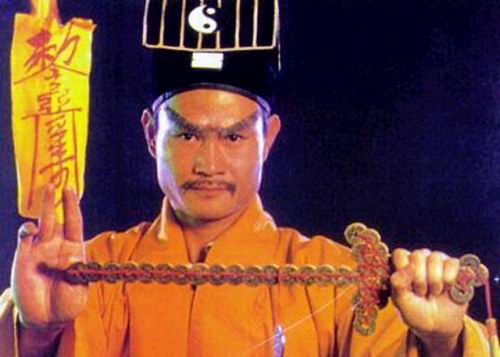
The Maoshan sect of Taoist Wicha is one of the most famous schools of magic in old China, and was once the figurehead of popular Taoism in Southern China. Though Maoshan has largely died out in Mainland China today, it continues to live on through practitioners in Taiwan, Hong Kong and Southeast Asia. It was popularized through HK vampire movies in the 80s and 90s, starring the late Lin Zhengying as the Maoshan master battling various vampires and ghosts. Incidentally, Lin is not a legitimate Maoshan practitioner. Maoshan Wicha 茅山术 is divided into 3 levels, consisting of High, Middle and Low 上, 中, 下. Each level is further divided into 3 sub-levels, totalling 9 parts. The Lower 3 levels of Maoshan Wicha 下三茅 deals mainly with black magic, controlling ghosts and spirits to do one's bidding. At this level, it is very easy to use the knowledge to do evil. But every Maoshan practitioner must go through this stage of learning first. If they succumb to the temptation of use black magic for their own selfish aims, they will be stuck as "Lower Mao" 下茅 and cannot progress to the Middle or High levels. Drawing talismans to enchant people's minds belong to the Lower Mao and the triad boss should be one such practitioner who "turned to the dark side". By using Maoshan Wicha to harm innocent young girls, he has accumulated very serious evil karma for himself. Great suffering awaits the boss when this karma ripens and his consciousness reappears in hell.
One good way to help those victims is to use a sacred Mit Mor to make holy water for them to drink. By invoking the 5 most powerful divine weapons, the holy water will destroy the Maoshan black magic used to control the girls. However, depending on the length of time that they have been enslaved, they will still be permanently damaged mentally to various degrees by the spell. As such, the harm of using such talismans is far-reaching indeed. Wicha, no matter Taoist or Buddhist in origin is a double-edged sword that can be used for both good and evil. Ideally, only the most righteous characters should be allowed to learn them. But in reality that is hardly the case. Thus we must all be very careful about the instruction and application of Wicha.

Sunday, September 19, 2010

Questions & Answers on the Netherworld II

The following is an interview of Mr Li Shu by his good friend Lin You Xiang. It is called "幽冥问答录" in Chinese. Mr Li had worked as a Judge in the Netherworld in the beginning of the previous century, and wished to share his experiences with his close friends. This interview was written down many decades ago and gives a very detailed, first-hand account of life in the ghost realm.

Q21: In dishing out punishment in the netherworld, are there any situations of passing the wrong judgement?

A: Never. In the netherworld they have clear and detailed records of the misdeeds of every sinner. Because of the hard evidence available, we could always provide a fair and just judgement.


Q22: We have so many thoughts passing through our heads everyday and in one lifetime they can be beyond count. We ourselves can not remember whether those thoughts are good or evil; how then can the officers in the netherworld record with such detail? Won't it be too tedious?

A: For inconsequential thoughts arising and passing away in quick succession, they won't be recorded down. However if one focuses one's mind on something, constantly thinking of it, be it wholesome or unwholesome, then such thoughts will be recorded down by the officers even if they do not translate into real action. If one actually acts upon them, then the merit and demerit recorded will be all the more clear and obvious.


Q23: Will those great cultivators of the Dharma be judged in the netherworld as well?

A: The netherworld court is only in charge of those being weighed down by some serious karma, or ordinary run-of-the-mill people with no significant good or evil karma. For those great cultivators, they are immediately reborn in the Pure Land or the heavenly realms. There's no need for them to go through the netherworld, nor are their names recorded in the books there. If for some reason their rebirth is delayed and they end up in the netherworld, all the officers will also stand up to receive them. Their spirits become larger and larger as they approach the bench, reaching as high as the roof. Once their names are called, they will ascend to the heavens right away and there's no way we can detain them.


Q24: Are there any foreigners in the netherworld? If so how can you communicate with each other? If there are none, then where do they go to be judged after they die?

A: When I was a judge, it was the Geng Zi year and the 8 allied armies conquered Beijing. Many local and foreign soldiers and civilians died in the war. Thus we saw a small no of foreigners in the netherworld court, but somehow we could still understand their languages. I also dealt with a commander named XXX and several loyal people who sacrificed their lives for the country. I saw with my own eyes that they rose up to the heavenly realms without need for any trial. Since there are so many different netherworld courts in the different regions of China, I think it is not unreasonable to assume that the same situation applies to countries in Europe and America.


Q25: Why do the netherworld government regularly invite humans to work there?

A: Because the rich and noble people usually have many guardian deities in their houses, as well as young and healthy servants emitting a strong level of Yang energy. It won't be easy for the ghost soldiers to go near them when they're about to die. The same applies to those military commanders who are about to die in camp, but are surrounded by all sorts of weapons and young soldiers on guard. That's why they need the spirits of the living humans to go through those barriers and arrest the dying person.*

*Live spirits are not affected by Yang energy.

Q26: For those people who died a violent death, with body parts missing or mutilated; are their ghostly forms any different from those who died normally?

A: Well actually their form is complete, no different from other ghosts. However their faces appear a little blur and there are blood stains visible on their injured parts. They also look sorrowful and pitiful, like they are in a lot of pain.

Q27: Is there a time when ghosts die and disappear from that realm also?

A: Yes. The oldest ghosts I saw were from the Song and Yuan dynasties*. But I have never met any ghosts from the Tang dynasty or earlier. Most probably they have exhausted their lifespan and passed away from the ghost realm. Unless they become Immortals or Buddhas, otherwise none can live forever.

*The oldest ghosts were around 800-1,000 yrs old.

Q28: Human appearances change and age as they grow from young to old; is it the same for ghosts?

A: The ghosts' appearances are the same as when they passed away from the human world. They do not seem to age as they grow older.

Q29: Is there day and night in the netherworld, and can we see the sun, moon and stars?

A: There is day and night like the human world, but one can never see the sun, moon and stars there. It is as if one is constantly stuck in the foggy weather in Sichuan province or the sandstorms in Northern China - there's never any clear sunny day in the netherworld. Everyday from 8am to 11am, all the ghosts will be hiding in the cool, dark areas as they are afraid of getting burned by the rising Yang energy in the morning. They will start to go out only after noon time.

Q30: Are there 4 seasons in the netherworld as well?

A: Yes, however it is not as hot in the summer and much colder in the winter as compared to the human world.

Q31: Is there food and drink in the netherworld? The paper money that we burn for the ghosts, can they be used to buy stuff there?

A: Yes. They eat many kinds of vegetables* and they do use the money to buy stuff.

*Vegetables that are thrown away in the human world become food for the ghosts.

Q32: Do ghosts need to eat 3 meals a day?

A: No, every time they eat, they will be full for a few days. So they eat much less regularly than humans.

Q33: Do ghosts need to sleep?

A: Well I do see beds and blankets but I never saw any of them sleeping. They will just walk around and close their eyes to rest for a short while. That is sufficient sleep for them and they don't need to sleep 7-8 hrs like us humans.

Q34: Are there street markets and shops there?

A: Yes but only on a minor scale, much like our small town shops. What is sold there are mostly food, drink and misc day to day items. There are no grand shopping malls like in the human world.

Q35: Can the ghosts and deities consume the food and drink that humans offer to them during religious ceremonies?

A: Yes, but they can only consume the smell of the offerings, not physically eat them. For example during summer if there are 2 identical bowls of food and we offer one bowl to the ghosts and keep the other bowl, the food that has been offered will surely rot first. Why? Because its "energy" has already been consumed by the ghosts.

Q36: Which food is better? Human or netherworld food?

A: Netherworld food can't be compared to human food.

Q37: Are there family relations for the ghosts in the netherworld?

A: Yes, but they might not be the same as what they used to have in the human world. Because they also have marriage and children in the netherworld*.

*That's why there are stories of ghosts who ask their human relatives to marry them through a netherworld marriage ceremony, usually performed by a Taoist priest.

Q38: Do ghosts live around their graves in the human world?

A: They do.

Q39: Is is painful for a person who just died and the spirit is separated from the body?

A: Most people are sick when they are about to die. When they die and their spirits leave their body, it is no different from opening the door and leaving a house. If they think about the suffering experienced due to sickness, they will feel that dying is a form of release. However if they still cling on to their dear ones or their wealth, they will find it hard to die as their spirits refuse to leave their bodies. That is where they experience the worst pain of death. For those who are by nature dispassionate, who feel little clinging to their family or possessions in this world; they will be able to pass away with ease, just like taking off one's clothes.

Q40: For the monks and priests who chant scriptures for the deliverance of the departed, are there any real benefits for the dead?

A: It all depends. For those who have performed great merits or committed heinous sins, they will immediately be reborn in heaven or hell and thus they have either no need or cannot receive the benefits of the chanting. Only those ordinary beings who have neither significant good nor evil karma will actually benefit from it in the netherworld. Then again the level of cultivation for the person chanting also plays an important part. A sutra recited once by a high level monk or filial descendant is 10 times better than one recited by an ordinary monk. An ordinary monk who puts his utmost sincerity and respect into chanting will also be able to generate great benefit for the dead. If an ordinary monk recites without any sincerity at all, then there is hardly any benefit to speak of. It is best to chant sutras for the dead within 49 days of their deaths. Beyond that they might have been sent to be reborn in other realms and the merits won't be able to reach them so easily.

**To be continued..**

Tuesday, September 14, 2010

MM Lee's views on Buddhism

MM Lee commented in an interview on 1/9/2010 that:
>
"The Buddhist believes in transmigration of the soul. If you live a good life, the reward is in your next migration, you will be a good being, not an ugly animal. It is a comforting thought, but my wife and I do not believe in it. She has been for two years bed-ridden, unable to speak after a series of strokes. I am not going to convert her. I am not going to allow anybody to convert her because I know it will be against what she believed in all her life. How do I comfort myself? Well, I say life is just like that. You can’t choose how you go unless you are going to take an overdose of sleeping pills, like sodium amytal. For just over two years, she has been inert in bed, but still cognitive. She understands when I talk to her, which I do every night. She keeps awake for me; I tell her about my day’s work, read her favourite poems.”
>
I think it comes as no surprise that MM Lee's understanding of Buddhism is quite superficial, no different from any ordinary man on the street. Afterall he has been secular and agnostic all his life. Belief in the transmigration, which is just another word for reincarnation of the soul is Hindu or Taoist in origin. Buddhists neither believe in a soul nor something that transmigrate from life to life. It is an eternalistic view that the Buddha rejected along with the nihilistic view of the materialists. What people call "Self" or "Soul" is merely a series of everchanging mental and physical factors that arise and pass away in accordance with cause and effect, nothing more. As such, MM Lee should not subscribe to one of the most common misconceptions that people have about Buddhism.
>
As for being rewarded in one's next life for doing good, that's not correct either. One of the virtues of the Dhamma is "Akaliko", or timelessness. The practice of the Dhamma is something that can be experienced here and now, with immediate results. One need not wait until the next life to receive one's reward. For example, when one practices meditation earnestly, one experiences calmness and serenity of mind right away. This is the reward in itself. MM Lee has experienced this "reward" himself, practicing the tranquility meditation that he learned from Mr Ng Kok Song; yet he does not realize it. Doing good and feeling joy all have an immediate effect on our consciousness and sub-conscious mind. If one develops mindfulness, one will realize this by oneself. As for what benefits one will get in the future, there's no point speculating whether there is or is not because knowledge will come by itself when one gains insight into the ultimate reality. At least MM still have a workable mind to train in calmness. For Mrs Lee, she is already in the final stage of life and no longer able to help herself. She will pass away in that helpless state, and go where her karma compels her to go. We come to this world with nothing and will also leave it with nothing. All that accompanies us are the good and evil deeds that we have done in this life. If there's anything MM should rightly understand about Buddhism, may he understand these 3 points, sadhu.

Monday, September 13, 2010

Questions & Answers on the Netherworld I

The following is an interview of Mr Li Shu by his good friend Lin You Xiang. It is called "幽冥问答录" in Chinese. Mr Li had worked as a Judge in the Netherworld in the beginning of the previous century, and wished to share his experiences with his close friends. This interview was written down many decades ago and gives a very detailed, first-hand account of life in the ghost realm.

Q1: Sir, is it true that you have worked as a Judge in the Netherworld in your younger days?
A: Yes it's true. Most people in this world find this very strange, but to me it was very normal.


Q2: When did this happen?
A: In the Geng Zi year of Emperor Guangxu's reign (1900). At that time I was only 19.


Q3: What was your position, who were you under and how many subordinates did you have?
A: I was under the Lord of Taishan*, but I never had the chance to meet him. All I did was submit my verdict after every judgement. At that time I was a Judge in one of the sub-courts and had 4 jury members to help me. As for the little ghosts handling the menial tasks, there were too many to count.


*The Lord of Taishan was equivalent to a Prime Minister in the ghost realm, in charge of the whole East Asia region. One term lasted 500 yrs, after which he would be replaced by another person. In terms of rank he was the 2nd highest authority, right below King Yama.*


Q4: How long did you work as a Judge? Did you work everyday and what region were you in charge of?
A: For 4-5 yrs. Yes I went everyday, and was in charge of 5 provinces of Northern China.


Q5: Why did "they" invite you to be a judge in the netherworld?
A: I asked my colleagues about this and the reason was because I had worked as a judge before in my previous lives. So as a result of past affinity, there I went again.


Q6: Is there written law in the netherworld? If not how could you judge without making any mistakes?
A: There isn't any. We judged according to the case and could naturally grasp the crux of the matter. There was no need to ponder at all.


Q7: What cases were you in charge of?
A: I judged the good and evil deeds within the first 10 months after a person's death. Beyond that there were others in charge.


Q8: Have you met King Yama?
A: Never did*.


*In the same way that provincial officials in China hardly have a chance to meet the Prime Minister or President, so it was not easy for Li to see King Yama or even the Lord of Taishan.*


Q9: How is it possible for the spirits to see all the good and evil deeds of humans, and record everything down without fail?
A: The spirits could see and hear things that humans could not. Thus all the thoughts and actions of humans are very clear for them to perceive and record down in detail. They could also tell the good and evil thoughts in a person's mind just by looking at the colour of the aura emitting from his or her head.


Q10: Were there sinful ghosts who refused to admit their guilt and tried to argue?
A: Many. Most of them would try their best to argue their case. Only when the solid evidence was brought before them that they had no choice but to bow down and admit their misdeeds.


Q11: After a person died, are they in a dream state or are they in a normal conscious state?
A: Normal conscious state*.


*Li was referring to after a person had been reborn as a ghost. If the person was still in the "in-between" or bardo state, then his consciousness would feel like it is dreaming.*


Q12: What time did you go to the netherworld everyday? What was the working hours like?
A: At first it was in the evening; later I could even go in the day, but it had to be in the afternoon. The journey to and fro took place in a sedan which moved very fast. Usually I judged for a few hours but there were also complicated cases which took a few days to reach a verdict. Thankfully cases like these were rare.


Q13: When you went to the netherworld was your physical body asleep?
A: Yes I was lying on my bed as if in a deep sleep. There was no need to eat or drink and one would not feel hungry or thirsty either. Sometimes when my consciousness was in the ghost realm and relatives came to visit me, I had to talk to them with my eyes closed. I could answer their questions but could not ask any myself. After the dialogue I would have no memory of what we talked about anyway.


Q14: After you come back from the netherworld, did you feel tired?
A: Yes slightly, like when you did not have a good night's sleep.


Q15: Was there food and drink in the netherworld?
A: Yes, but they did not allow me to consume them*.


*Because it was not suitable for human beings*.


Q16: What was the working attire there like? What was the format of the official documents and how were they processed?
A: When I was a judge there, we were still under the Qing government rule. As such the attire, format and processing of the documents were no different from the Qing officials. But after the revolution and birth of the Chinese Republic, I believe the system there had changed accordingly as well*.

*The netherworld is a close reflection of the human world*.

Q17: Did the netherworld judges receive a salary?
A: Yes, but the money is totally useless for humans*, so I did not take it.


*Paper money or Hell bank notes cannot be used to buy anything in the human world, as such they are useless.*

Q18: How many different types of punishment are there in the netherworld?
A: Too many. And they are all hundreds of times more terrible than those in the human world. In the modern context they would be viewed as extremely brutal. But from my personal experience, it is better to take the punishment in the human world as it will end after you die. In the netherworld you have to suffer it again and again! For example, a sinner who murdered 10 people will have to be tortured to death 10 times in hell. Then he would be sent to be reborn 10 times and be murdered by others in every life. Tortures such as the saw mill, the grinder, the mountain of knifes and the wok of boiling oil are all real. The fruits of evil karma are truly frightening indeed!


Q19: What virtues are most valued in the netherworld? And what evil deeds are most detested?
A: For men, the virtues were loyalty to the country and filial piety. For women, it was fidelity and filial piety*. These men and women could have their punishment reduced even if they were guilty of other wrongdoings. For evil deeds, killing and sexual misconduct were most detested. Killing is the heavier of the 2 and if a person killed another due to sexual misconduct, his punishment would be doubled as a result. Thus the ancients say, "10,000 evils originate from lust".

*In accordance to the conservative values in those feudal times.*

Q20: Since there was no written law in the netherworld, how do you judge whether an evil deed was light or heavy?
A: It all depends on the person's motivation in doing the deed and the effect it had on others. We used reasoning to come up with an appropriate sentence for each wrongdoing by considering all the circumstances.

**To be continued..**

Monday, September 06, 2010

LP Kern of Wat Klong Buri


Arriving at Wat Klong Buri in Sakaew to see LP Kern, the master of Khmer Metta magic. He is a disciple of Cambodian master LP Gai.


Receiving the Metta blessing ritual from LP Kern. It is done on both the front and the back.
Accepting the holy amulets from LP after he reblessed them.
LP also gave the Metta blessing to my friend.

Sunday, September 05, 2010

LP Nong of Wat Wang Si Thong

LP Nong of Wat Wang Si Thong is a well-known master in Sakaew who have blessed a wide variety of amulets and images in recent times. He is already very old but he will personally rebless the items that you chow from the temple.
The altar in LP Nong's kuti.
One of the monks asking LP Nong to give us some of his hair to keep as relics. He is a bit hard of hearing due to his age.
The 5" Lersi Narai bucha that I chowed.